
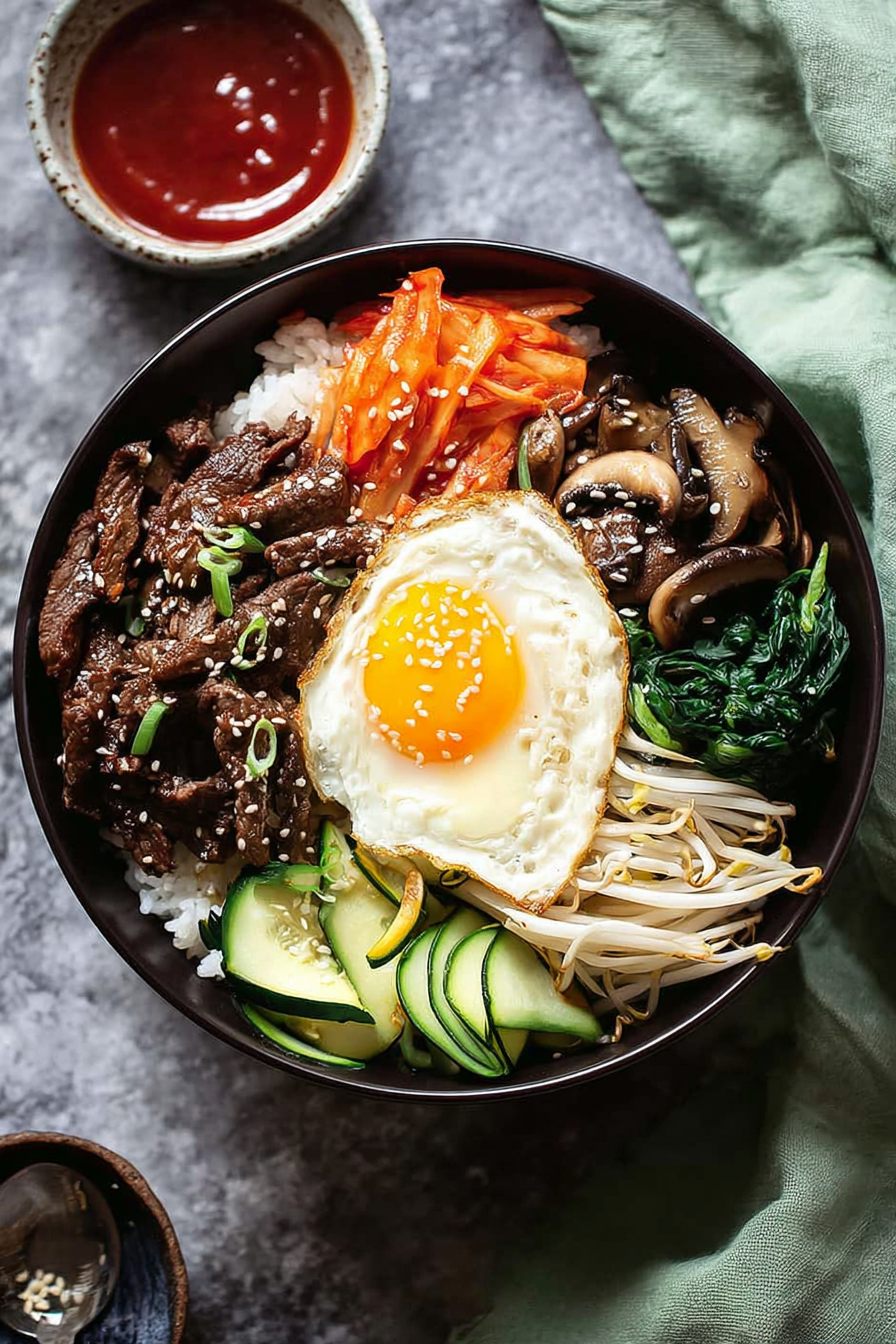
How To Make The Best Bibimbap
A colorful Korean rice bowl topped with tender marinated beef, crisp vegetables, and a runny egg. Stir it all together with bold, spicy gochujang sauce for the ultimate comfort meal.
Print Pin Servings: 4
Notes
Ingredients
Base- 4 cups cooked white rice, preferably short-grain (Note 1)
- 4 eggs
- 2 tsp sesame seeds
- 250 g / 8 oz beef tenderloin or thick steak, very finely sliced (subs, Note 2)
- 1/4 green apple, grated on a box grater (Note 3)
- 3 garlic cloves, minced
- 1 tbsp soy sauce, light or all-purpose (Note 4)
- 1 tbsp honey (or brown sugar)
- 2 tsp toasted sesame oil (Note 9)
- 2 large carrots, cut into 5 × 0.5 cm / 2 × 1/5" batons
- 2 large zucchini, cut into 5 × 0.5 cm / 2 × 1/5" batons
- 1 bunch spinach, cut into 5 cm / 2" lengths
- 8 large dried shiitake mushrooms (Note 5)
- 4 cups bean sprouts
- 2 tsp garlic, minced (3 cloves)
- 8 tsp vegetable oil, divided
- 1/2 tsp salt
- 1.5 tsp soy sauce, light or all-purpose (Note 4)
- 1/4 tsp fish sauce (or soy sauce)
- 1/4 tsp white sugar
- Toasted sesame oil (Note 9)
- 4 tbsp gochujang paste (Note 6)
- 1/2 cup water + 3/4 cup low-sodium chicken broth.
- 2 tbsp rice vinegar (Note 8)
- 1.5 tsp soy sauce (Note 4)
- 3 tsp white sugar
- 1 garlic clove, finely grated
- 2.5 tsp toasted sesame oil (Note 9)
Instructions
Make the SauceStir all sauce ingredients together until the sugar fully dissolves. Set aside.Marinate the Beef
- Combine the marinade ingredients in a bowl, then toss in the sliced beef.
- Let it rest for at least 30 minutes or refrigerate overnight.
- Heat 2 tsp oil in a large skillet over high heat. Let excess marinade drip off the meat before cooking.
- Sear for 3–4 minutes, allowing some pieces to caramelize. Remove from the pan and keep warm.
- Shiitake: Soak in boiling water for 30 minutes until softened. Drain, squeeze out extra liquid, and slice.
- Optional salting (Note 10): Place carrots and zucchini in separate bowls. Sprinkle each with 1/4 tsp salt, toss, rest 20 minutes, then discard accumulated liquid.
- Shiitake: Heat 2 tsp oil over medium-high. Sauté mushrooms for 2 minutes, then add 1.5 tsp soy sauce, 1/4 tsp sugar, and 1/2 tsp garlic. Cook 1 minute more, then transfer to a plate.
- Carrots: Add 2 tsp oil to the pan and cook until just tender, about 5–8 minutes.
- Zucchini: Cook the same way, about 4 minutes.
- Spinach: Sauté in 2 tsp vegetable oil plus a touch of sesame oil until wilting. Add 1/2 tsp garlic and salt to taste. Remove and squeeze out excess moisture once cooled.
- Bean Sprouts: Simmer for 5 minutes or microwave-steam for 3 minutes until softened. Rinse under cold water, squeeze dry, and toss with 2 tsp sesame oil, 1 tsp garlic, and 1/4 tsp fish sauce.
- Fry eggs to your liking (runny yolks are traditional).
- Divide warm rice into bowls.
- Arrange the vegetables and beef neatly on top.
- Add the egg last.
- Finish with sesame seeds and a light drizzle of sesame oil.
- Serve with the Bibimbap Sauce on the side or spooned on top.
- Rice: Short-grain white rice is ideal (its stickiness helps with chopsticks), but any white rice works.
- Beef: Many Asian grocers sell pre-sliced frozen beef for stir-fries — a huge time saver. To slice your own, partially freeze the meat 30–60 minutes, then cut very thinly.
- Apple: Grated apple or nashi pear adds subtle sweetness and helps tenderize the meat — a common Korean marinade technique.
- Soy Sauce: Use light or all-purpose soy. Avoid dark or sweet soy.
- Shiitake: Dried mushrooms offer deeper flavor. Substitute fresh shiitake or other fresh mushrooms if needed (skip soaking).
- Gochujang: Korean fermented chile paste; essential for bibimbap. Inexpensive and long-lasting.
- Rice Vinegar: Can be swapped for apple cider .
- Sesame Oil: Toasted sesame oil is dark and fragrant; use this for best flavor.
- Salting Vegetables: Seasons them through and removes excess moisture. You can skip it and season during cooking instead.
- Storage: Great for meal prep. Keeps 4–5 days refrigerated. Beef can be frozen immediately after mixing with marinade.
- Research Notes: This version draws on many classic approaches and traditional Korean references.
- Nutrition: Calculated with 1 cup of cooked rice per serving.
