Skip to content


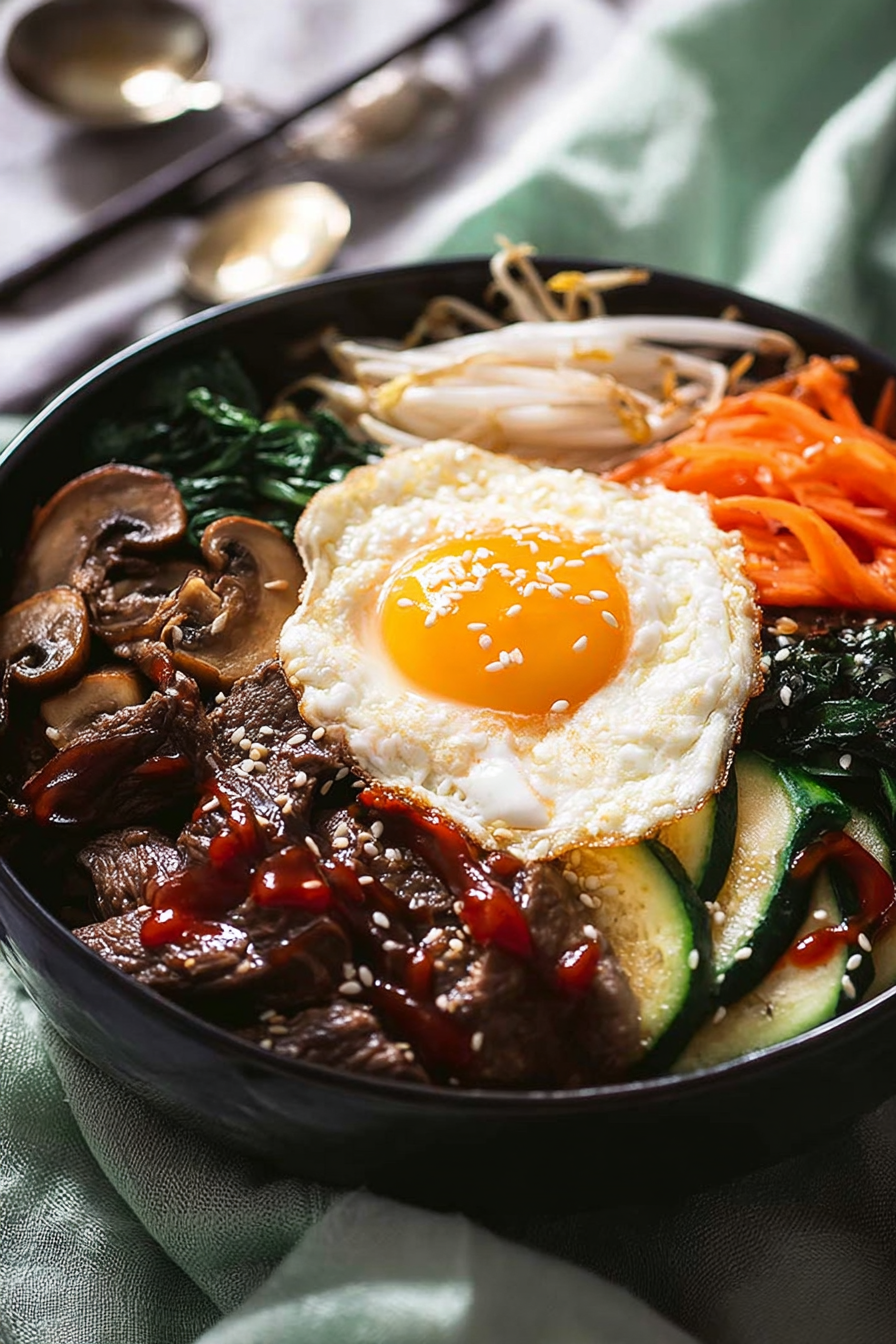
 Bibimbap is one of those meals that feels instantly comforting. As the vegetables sauté and the marinated beef sizzles, the kitchen fills with the warm aroma of garlic, sesame oil, and gochujang.
Stirring everything together — the crisp veggies, tender beef, warm rice, and that bold, spicy-sweet sauce — turns simple ingredients into something deeply satisfying.
Your family will love mixing and matching their bowls with their favorite veggies, and you’ll love how effortlessly the whole meal comes together. It’s colorful, nourishing, and perfect for busy weeknights or lazy weekend cooking.
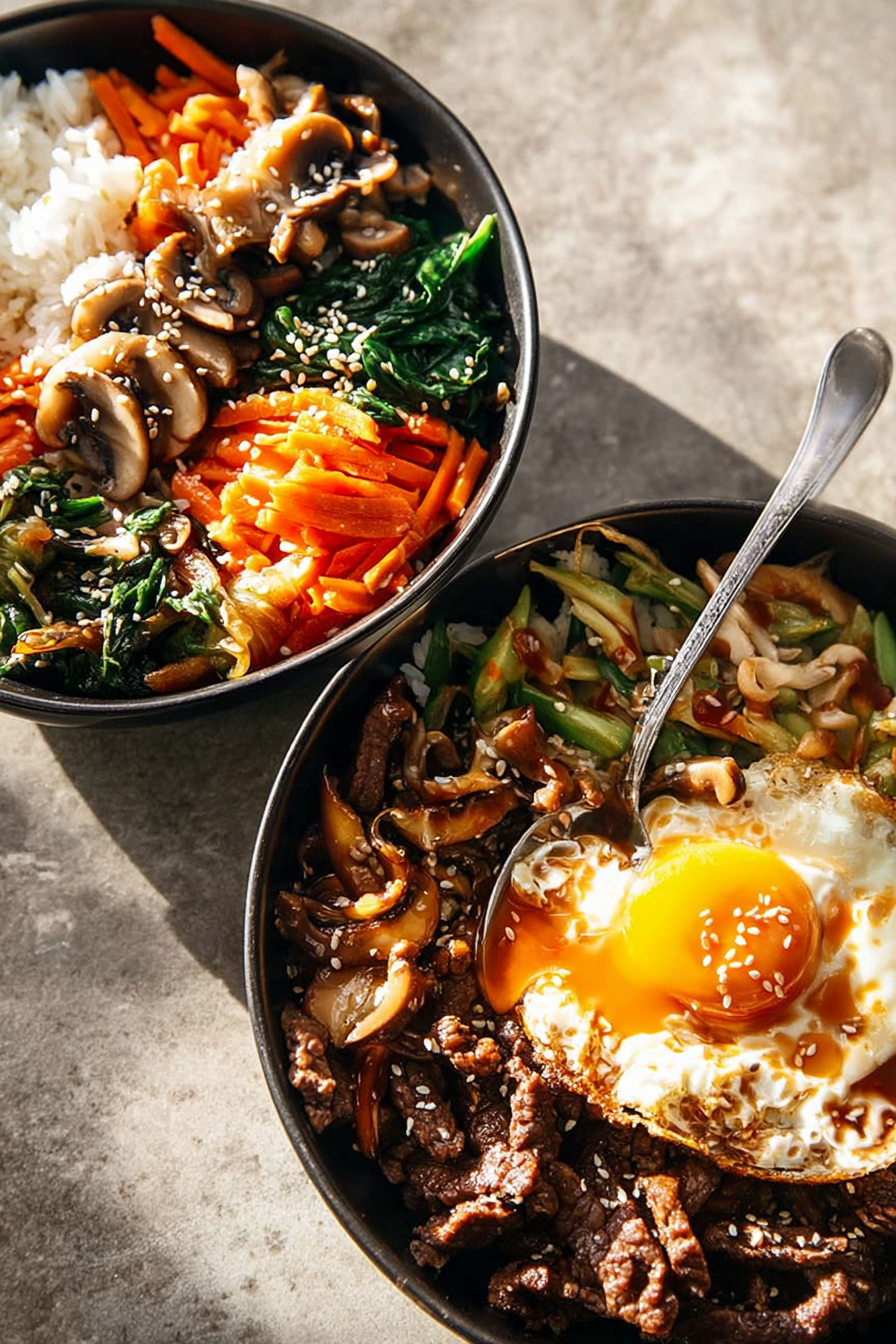
For the Rice & Eggs
- White Rice – You’ll need 4 cups of cooked short-grain rice. Its stickiness makes it perfect for bibimbap.
- Eggs – Fry 4 eggs to top each bowl; runny yolks add richness.
- Sesame Seeds – A simple finishing touch for flavor and texture.
For the Korean Beef & Marinade
- Beef – Use 250g finely sliced beef tenderloin or thick steak. Thin slices cook quickly and stay tender.
- Green Apple – Grated apple adds natural sweetness and helps tenderize the meat.
- Garlic – Three minced cloves bring bold, savory flavor.
- Soy Sauce – A tablespoon of light or all-purpose soy seasons the beef.
- Honey – Adds a little sweetness and balances the savory elements.
- Toasted Sesame Oil – Just 2 teaspoons provide deep, nutty aroma.
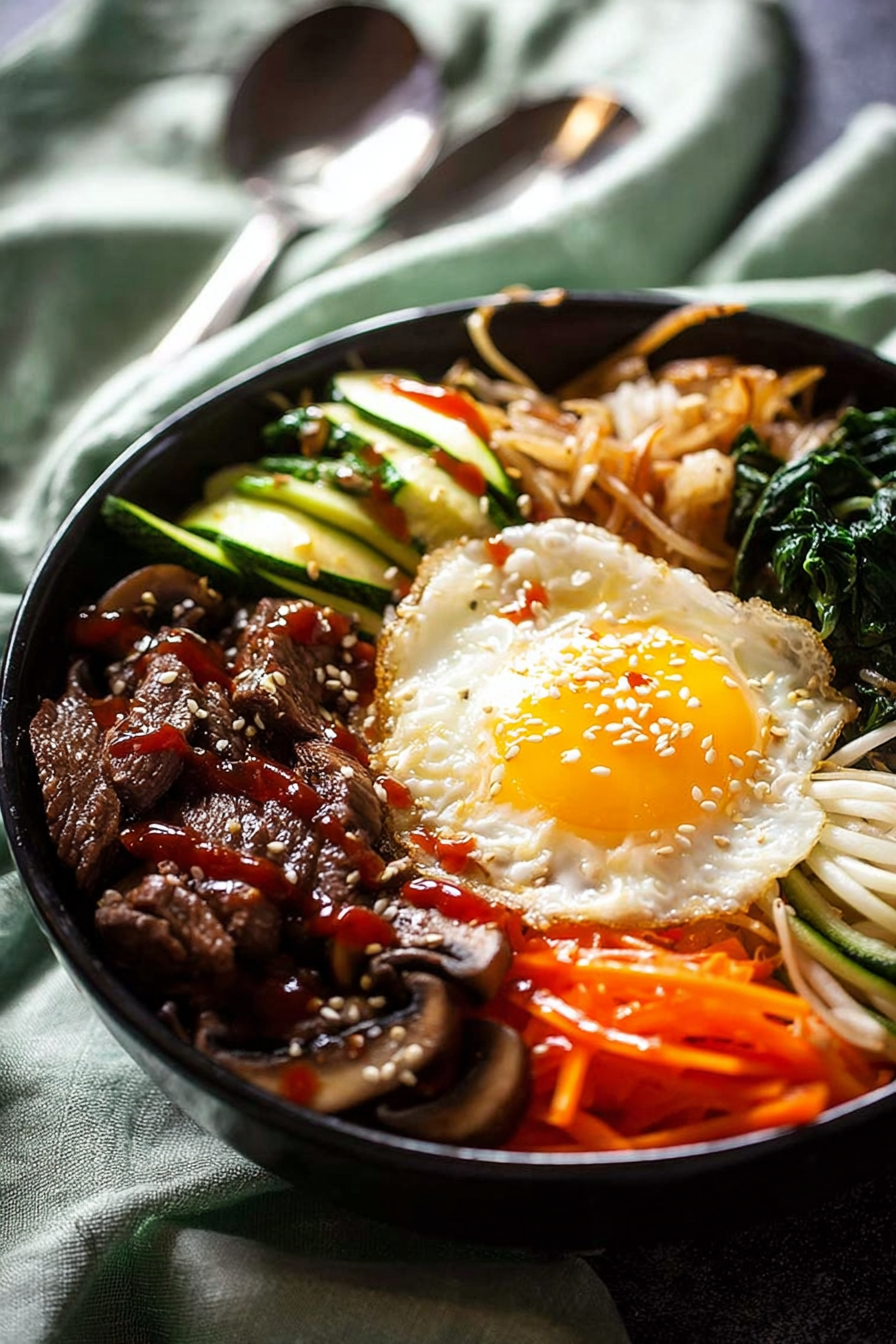
For the Vegetables
- Carrots – Cut into matchsticks. They add color and a bit of crunch.
- Zucchini – Also cut into matchsticks for even cooking.
- Spinach – Quickly sautéed for a soft, earthy component.
- Dried Shiitake Mushrooms – Rehydrated for rich umami depth.
- Bean Sprouts – Light and crunchy; perfect for balance.
- Garlic – Extra garlic (2 tsp) flavors several of the veggie components.
- Vegetable Oil – Used for sautéing each vegetable.
- Salt – For seasoning during cooking.
- Soy Sauce – Just a touch adds savoriness to the mushrooms.
- Fish Sauce – A tiny amount seasons the bean sprouts; soy sauce works as a substitute.
- White Sugar – A pinch balances the sodium and enhances flavor.
- Toasted Sesame Oil – Adds aroma and finishing flavor to multiple veggies.
For the Bibimbap Sauce
- Gochujang Paste – The heart of the sauce; spicy, savory, and packed with umami.
- Mirin – Adds sweetness and complexity.
- Rice Vinegar – Brightens the sauce and balances the gochujang.
- Soy Sauce – Brings saltiness and depth.
- White Sugar – Softens the heat and rounds everything out.
- Garlic – One finely grated clove for extra punch.
- Toasted Sesame Oil – Finishes the sauce with nutty richness.
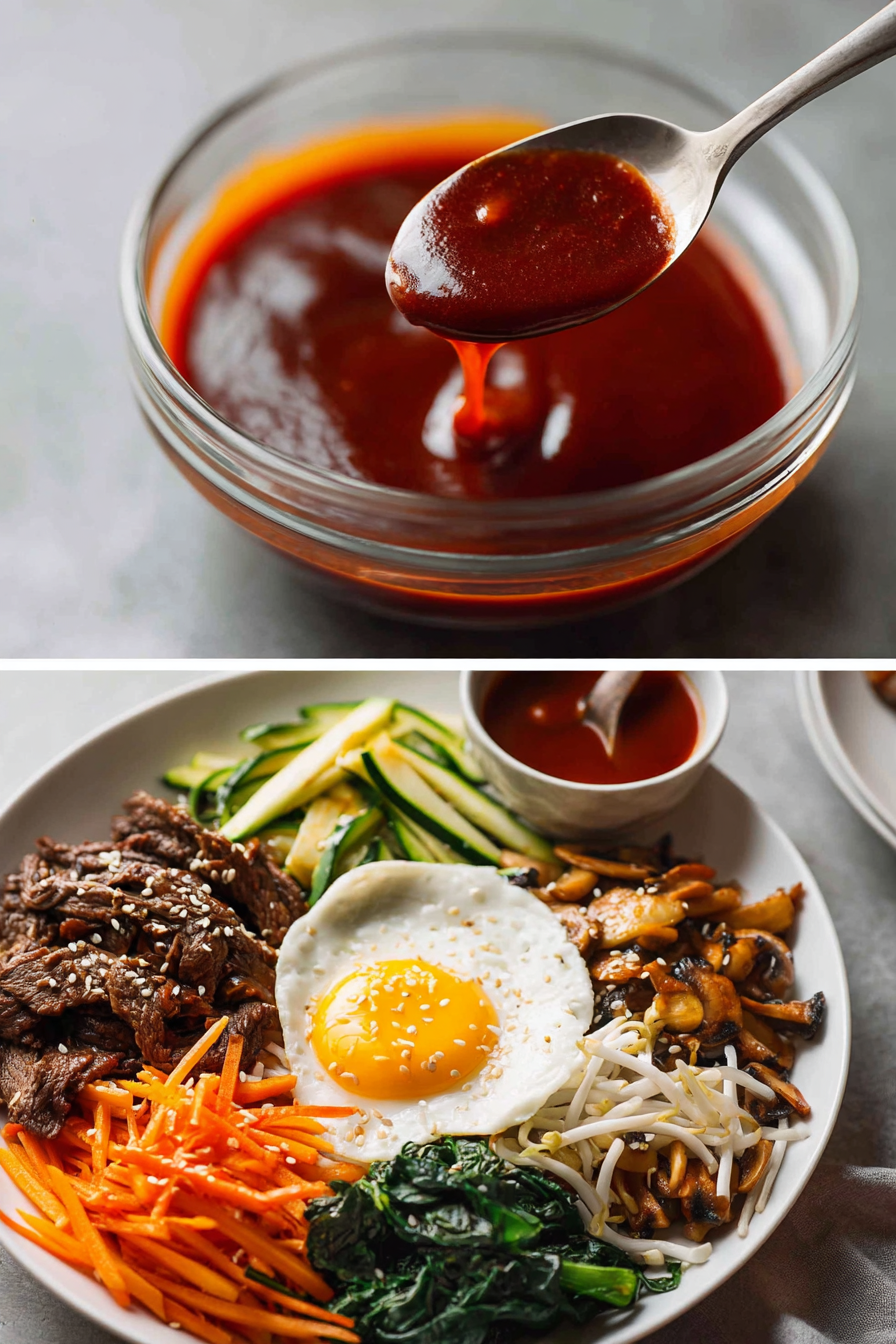
How To Make The Best Bibimbap
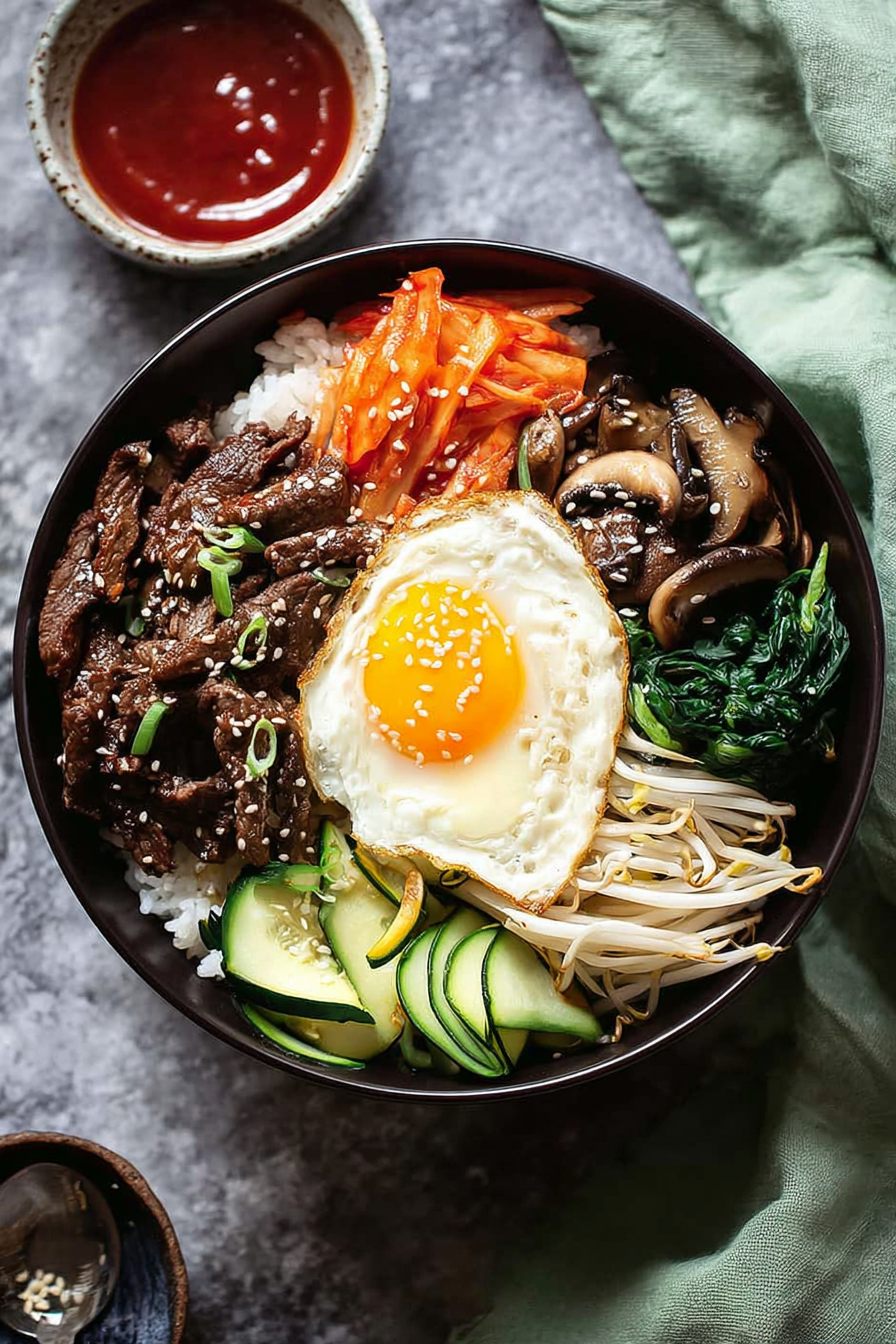
A colorful Korean rice bowl topped with tender marinated beef, crisp vegetables, and a runny egg. Stir it all together with bold, spicy gochujang sauce for the ultimate comfort meal.
Print Pin Servings: 4
Notes
Ingredients
Base- 4 cups cooked white rice, preferably short-grain (Note 1)
- 4 eggs
- 2 tsp sesame seeds
- 250 g / 8 oz beef tenderloin or thick steak, very finely sliced (subs, Note 2)
- 1/4 green apple, grated on a box grater (Note 3)
- 3 garlic cloves, minced
- 1 tbsp soy sauce, light or all-purpose (Note 4)
- 1 tbsp honey (or brown sugar)
- 2 tsp toasted sesame oil (Note 9)
- 2 large carrots, cut into 5 × 0.5 cm / 2 × 1/5" batons
- 2 large zucchini, cut into 5 × 0.5 cm / 2 × 1/5" batons
- 1 bunch spinach, cut into 5 cm / 2" lengths
- 8 large dried shiitake mushrooms (Note 5)
- 4 cups bean sprouts
- 2 tsp garlic, minced (3 cloves)
- 8 tsp vegetable oil, divided
- 1/2 tsp salt
- 1.5 tsp soy sauce, light or all-purpose (Note 4)
- 1/4 tsp fish sauce (or soy sauce)
- 1/4 tsp white sugar
- Toasted sesame oil (Note 9)
- 4 tbsp gochujang paste (Note 6)
- 1/2 cup water + 3/4 cup low-sodium chicken broth.
- 2 tbsp rice vinegar (Note 8)
- 1.5 tsp soy sauce (Note 4)
- 3 tsp white sugar
- 1 garlic clove, finely grated
- 2.5 tsp toasted sesame oil (Note 9)
Instructions
Make the SauceStir all sauce ingredients together until the sugar fully dissolves. Set aside.Marinate the Beef
- Combine the marinade ingredients in a bowl, then toss in the sliced beef.
- Let it rest for at least 30 minutes or refrigerate overnight.
- Heat 2 tsp oil in a large skillet over high heat. Let excess marinade drip off the meat before cooking.
- Sear for 3–4 minutes, allowing some pieces to caramelize. Remove from the pan and keep warm.
- Shiitake: Soak in boiling water for 30 minutes until softened. Drain, squeeze out extra liquid, and slice.
- Optional salting (Note 10): Place carrots and zucchini in separate bowls. Sprinkle each with 1/4 tsp salt, toss, rest 20 minutes, then discard accumulated liquid.
- Shiitake: Heat 2 tsp oil over medium-high. Sauté mushrooms for 2 minutes, then add 1.5 tsp soy sauce, 1/4 tsp sugar, and 1/2 tsp garlic. Cook 1 minute more, then transfer to a plate.
- Carrots: Add 2 tsp oil to the pan and cook until just tender, about 5–8 minutes.
- Zucchini: Cook the same way, about 4 minutes.
- Spinach: Sauté in 2 tsp vegetable oil plus a touch of sesame oil until wilting. Add 1/2 tsp garlic and salt to taste. Remove and squeeze out excess moisture once cooled.
- Bean Sprouts: Simmer for 5 minutes or microwave-steam for 3 minutes until softened. Rinse under cold water, squeeze dry, and toss with 2 tsp sesame oil, 1 tsp garlic, and 1/4 tsp fish sauce.
- Fry eggs to your liking (runny yolks are traditional).
- Divide warm rice into bowls.
- Arrange the vegetables and beef neatly on top.
- Add the egg last.
- Finish with sesame seeds and a light drizzle of sesame oil.
- Serve with the Bibimbap Sauce on the side or spooned on top.
- Rice: Short-grain white rice is ideal (its stickiness helps with chopsticks), but any white rice works.
- Beef: Many Asian grocers sell pre-sliced frozen beef for stir-fries — a huge time saver. To slice your own, partially freeze the meat 30–60 minutes, then cut very thinly.
- Apple: Grated apple or nashi pear adds subtle sweetness and helps tenderize the meat — a common Korean marinade technique.
- Soy Sauce: Use light or all-purpose soy. Avoid dark or sweet soy.
- Shiitake: Dried mushrooms offer deeper flavor. Substitute fresh shiitake or other fresh mushrooms if needed (skip soaking).
- Gochujang: Korean fermented chile paste; essential for bibimbap. Inexpensive and long-lasting.
- Rice Vinegar: Can be swapped for apple cider .
- Sesame Oil: Toasted sesame oil is dark and fragrant; use this for best flavor.
- Salting Vegetables: Seasons them through and removes excess moisture. You can skip it and season during cooking instead.
- Storage: Great for meal prep. Keeps 4–5 days refrigerated. Beef can be frozen immediately after mixing with marinade.
- Research Notes: This version draws on many classic approaches and traditional Korean references.
- Nutrition: Calculated with 1 cup of cooked rice per serving.
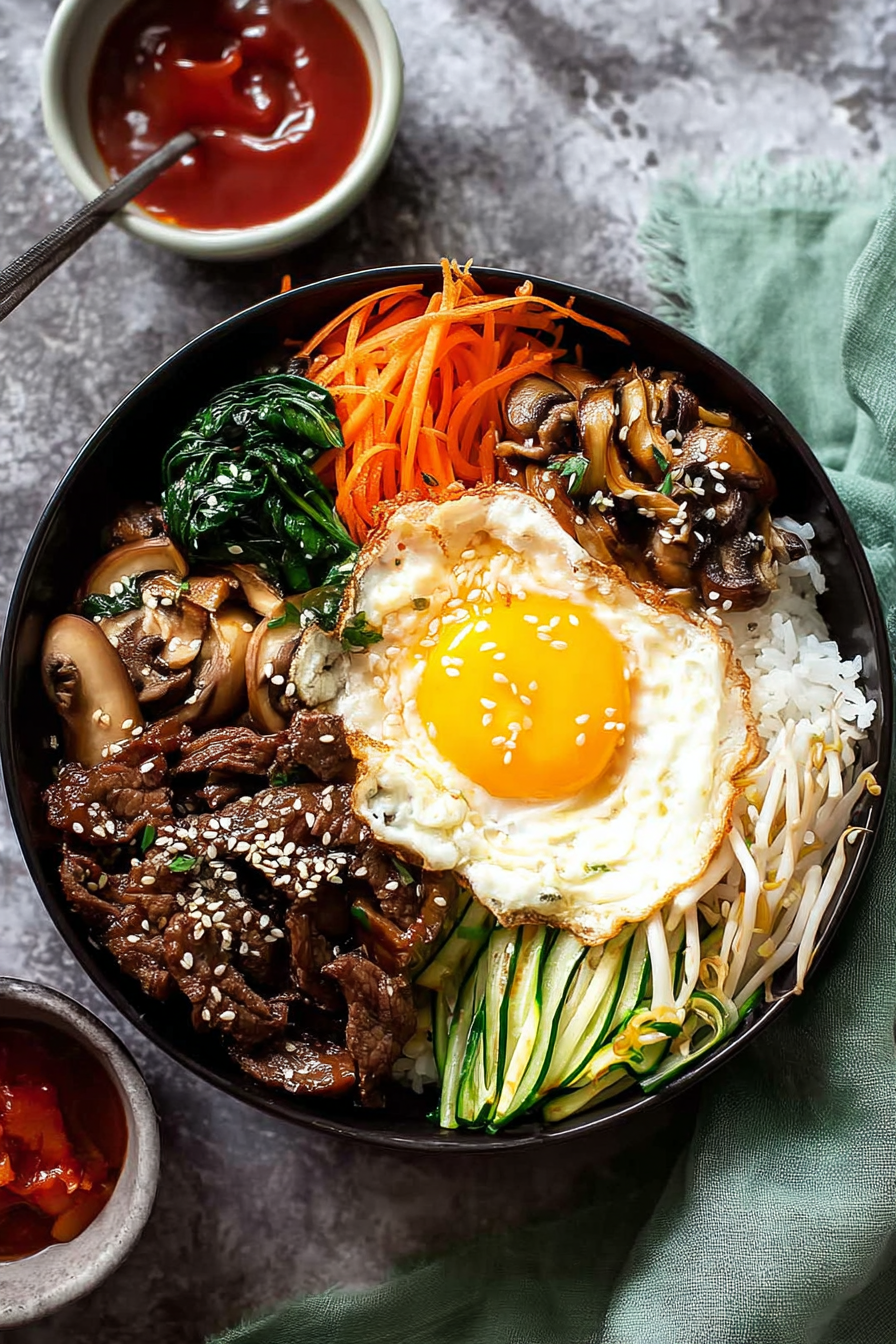
- Can I make this without the beef?
Absolutely! Bibimbap is super flexible. Skip the beef and load up on veggies, or throw in tofu if you want a protein boost. The magic is in the sauce — once that’s on, everything tastes amazing.
- Do I need special Korean bowls to make this?
Nope! A regular bowl works just fine. If you want those crispy golden rice bits you get from a hot stone bowl, just fry a little rice in a pan with sesame oil before assembling. Instant “faux-dolsot” effect.
- I don’t have all the vegetables listed. What can I swap?
Use whatever you’ve got! Bibimbap was made for substitutions. Bell peppers, kale, mushrooms, cabbage — if it cooks quickly or sautés well, it belongs in the bowl. Aim for colour + texture variety and you’re golden.
- Do I need to use short-grain rice?
Short-grain or sushi rice is ideal because it’s stickier, so everything holds together when you mix. But if all you’ve got is long-grain, don’t stress — it still works. It just won’t be quite as “proper” bibimbap-ish, but still totally delicious.
- Can I prepare everything ahead of time?
Yes, and it actually makes your life much easier. Cook the veggies, mix the sauce, even marinate the beef the night before. On the day: warm the rice, sear the beef, fry the eggs. Dinner on the table in minutes. Meal-prep win!