Skip to content


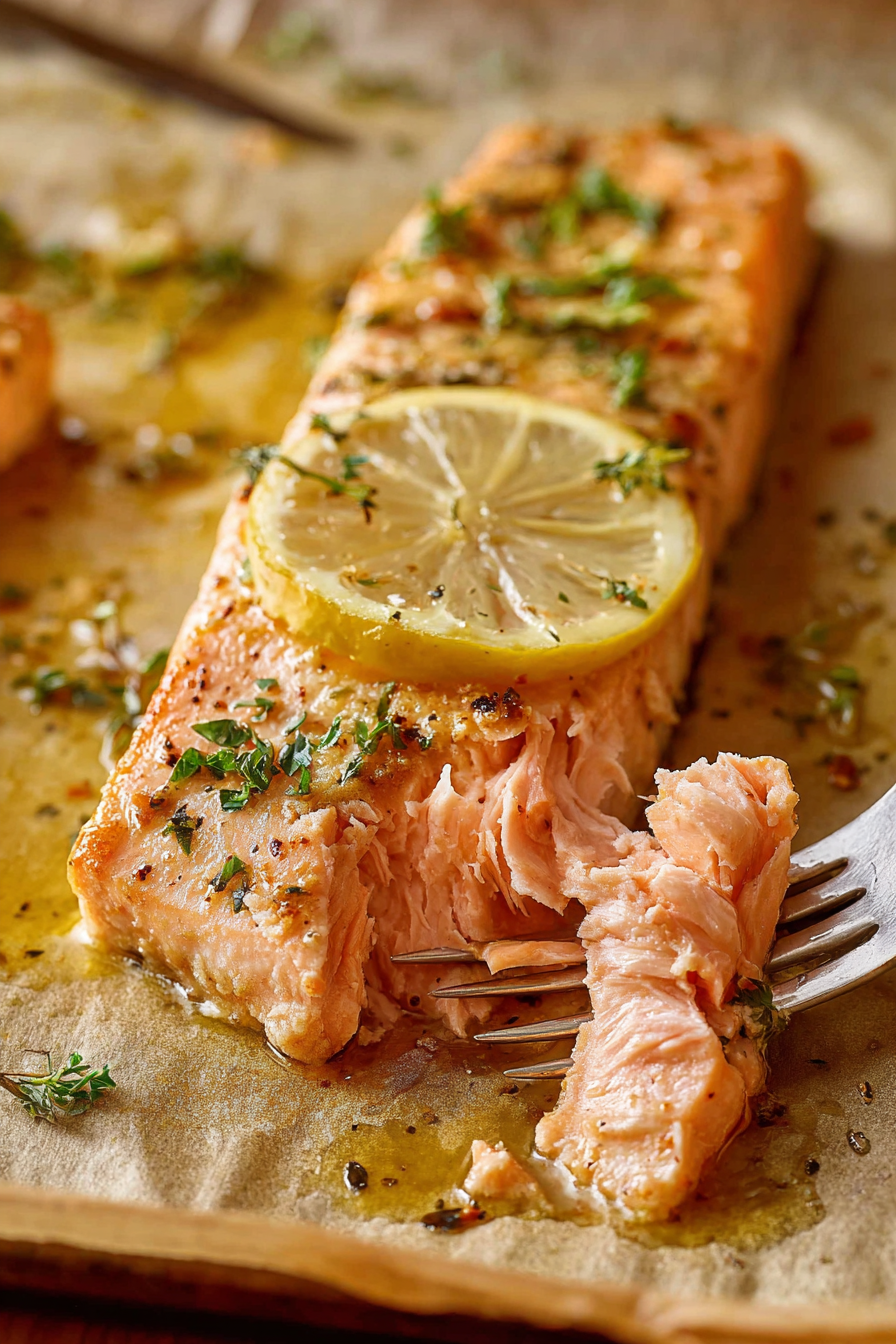
This baked salmon has become one of those dependable dinners I turn to when I want something nourishing without overthinking it.
On busy evenings, there’s something comforting about sliding a tray of salmon into a hot oven, knowing it will come out tender, flaky, and full of bright lemon flavor every time.
With just a handful of simple ingredients and no marinating required, this recipe proves that cooking salmon at home can be easy, calm, and deeply satisfying—perfect for both weeknights and relaxed dinners alike.

For Baked Salmon
- Salmon Fillet – Use a 1½-pound fillet cut into portions. Both wild and farm-raised salmon work well here; farm-raised is slightly more forgiving if overcooked.
- Fresh Parsley – Adds a clean, fresh finish and balances the richness of the fish.
- Olive Oil (or Vegetable Oil) – Keeps the salmon moist while helping the flavors coat evenly as it bakes.
- Fresh Lemon Juice – Brings brightness and acidity that enhances the natural flavor of the salmon.
- Garlic – Adds depth and savory flavor without overpowering the fish.
- Dijon Mustard – Provides a subtle tang and helps emulsify the glaze so it spreads beautifully.
- Sea Salt – Enhances all the flavors without masking the salmon’s natural taste.
- Black Pepper – Adds just a hint of warmth and spice.
- Lemon Slices – Placed on top for gentle citrus aroma and an attractive presentation.
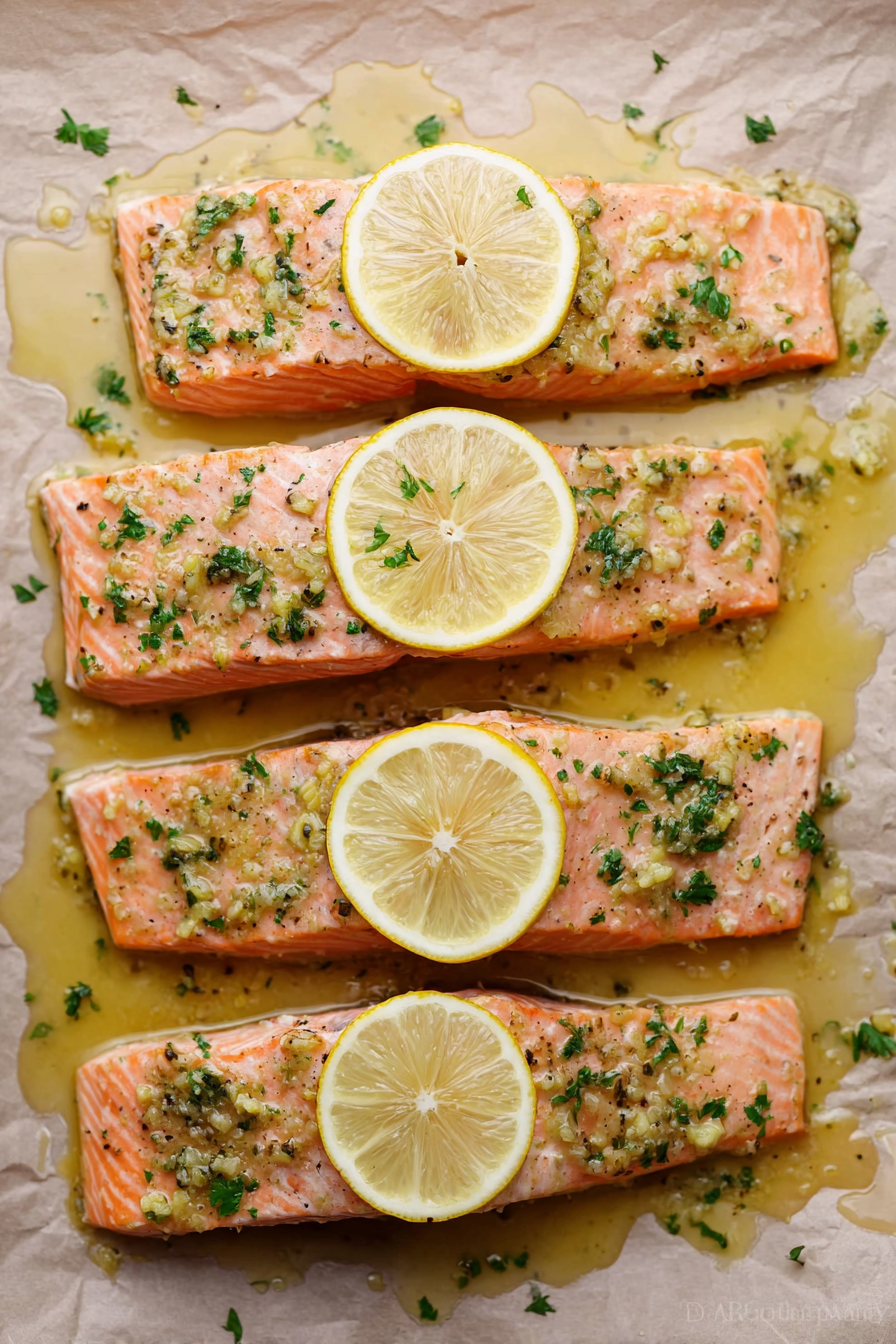
The perfect Oven-Baked Salmon with Lemon Dijon Glaze
Notes
Ingredients
- 1 1/2 lb salmon fillet, cut into 4 filets
- 2 Tbsp fresh parsley, finely chopped
- 2 Tbsp extra light olive oil, or vegetable oil
- 2 Tbsp fresh lemon juice
- 3 garlic cloves, minced, pressed, or grated
- 1/2 Tbsp Dijon mustard
- 1/2 tsp fine sea salt
- 1/8 tsp black pepper, freshly cracked
- 1/2 lemon, sliced into 4 rings for garnish
Instructions
- Heat the oven to 450°F. Prepare a rimmed baking sheet by lining it with parchment paper, foil, or a silicone baking mat. Place the salmon fillets on the sheet with the skin facing down.
- In a small bowl, mix together the parsley, garlic, oil, lemon juice, Dijon mustard, salt, and black pepper until well combined.
- Spoon and brush the mixture evenly over the tops and sides of the salmon fillets. Finish by placing one lemon slice on each piece.
- Transfer the pan to the oven and bake uncovered for 12–15 minutes, until the salmon flakes easily with a fork and registers 145°F at the thickest part when checked with an instant-read thermometer. Avoid baking longer than necessary.
- After applying the glaze, place the salmon directly into the oven. Letting it sit too long before baking can cause the lemon juice to affect the texture of the fish. This recipe does not require marinating—apply the mixture and bake immediately.

1. Can I use frozen salmon?
Absolutely. Just make sure it’s fully thawed before you start. I usually thaw it overnight in the fridge, then pat it dry really well so the glaze sticks properly. Wet salmon = diluted flavor, and we don’t want that.
2. Do I need to marinate the salmon first?
No marinating needed here — and that’s a good thing. The lemon juice can actually start to “cook” the salmon if it sits too long. Just brush on the glaze, pop it straight into the oven, and let the heat do the work.
3. How do I know when the salmon is cooked perfectly?
The foolproof way is a thermometer — you’re aiming for 145°F at the thickest part. No thermometer? Look for salmon that flakes easily with a fork but still looks juicy inside. If it’s dry, it’s gone too far.
4. Can I make swaps if I’m missing an ingredient?
Yes, within reason. Parsley can be swapped for dill or chives, and olive oil works just as well as vegetable oil. The key flavors here are lemon and Dijon — keep those, and you’re golden.
5. What should I serve with this?
This salmon plays nicely with just about anything. Think roasted vegetables, rice, potatoes, or a simple green salad. I usually go for something unfussy so the salmon stays the star.