Skip to content


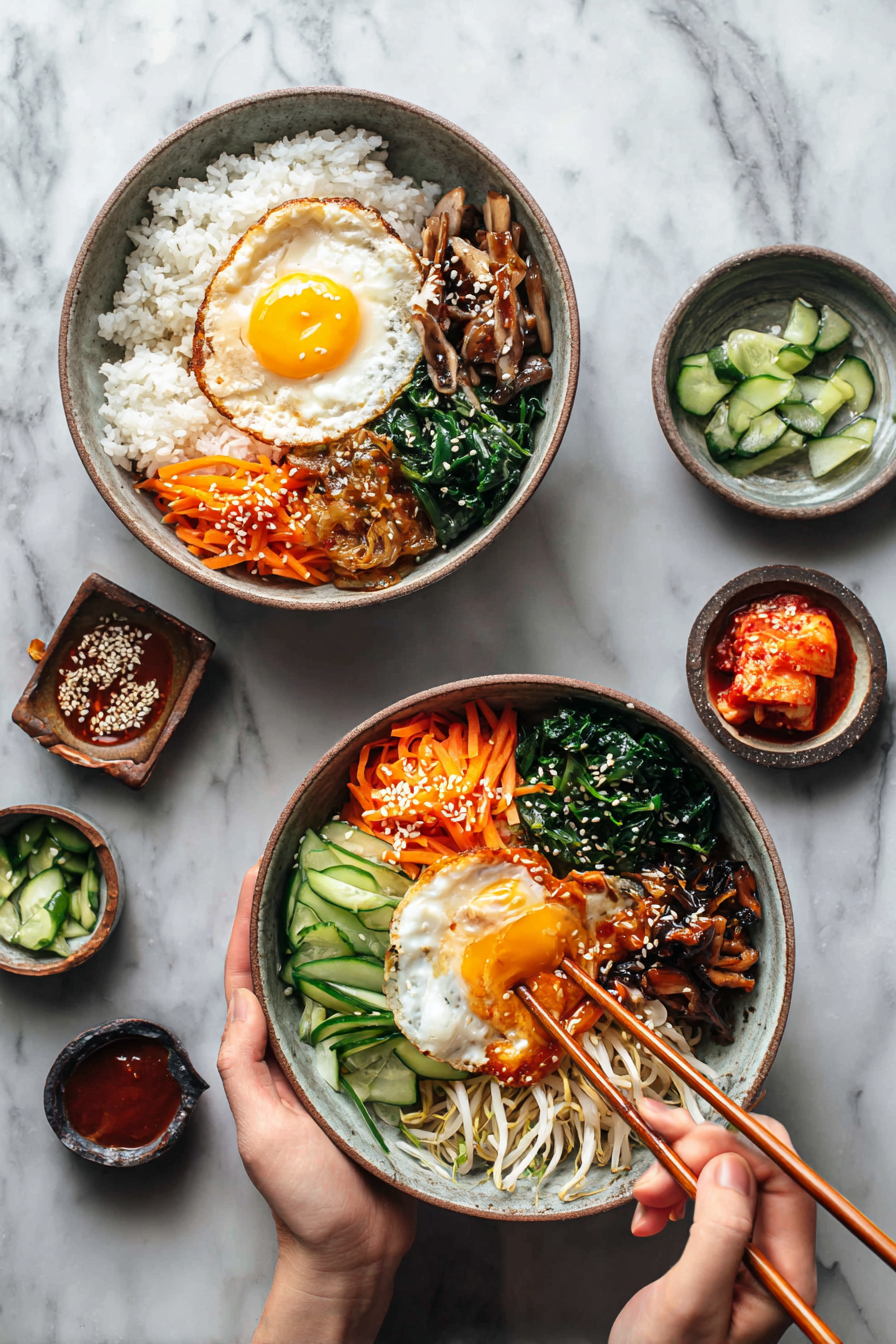 When I’m craving something warm, colorful, and incredibly satisfying, bibimbap is the meal I turn to.
As you prep each component, the kitchen fills with the cozy aroma of sesame oil, tamari, and fresh veggies.
There’s something so calming about quick-pickling cucumbers, softening carrots in a warm skillet,
and wilting spinach just until it relaxes—everything simple, fresh, and full of life.
This has quickly become one of my favorite make-ahead meals.
I’ll prep the vegetables, cook the rice, and whisk the gochujang sauce earlier in the week.
Then, when dinnertime comes, assembling a vibrant, nourishing bowl takes only minutes.
Topped with a fried egg or tofu (plus a spoonful of kimchi), it’s comforting, energizing, and always delicious.

For the Bibimbap Vegetables & Base
- English Cucumber – Thinly sliced and lightly seasoned for a crisp, refreshing element that balances the warm components.
- Rice Vinegar – Adds a gentle tang that brightens the cucumbers.
- Toasted Sesame Oil – Gives the veggies that signature nutty aroma and richness used throughout Korean cooking.
- Mung Bean Sprouts – Blanched quickly for crunch and freshness.
- Shredded Carrots – A fast-cooking veggie that adds color and a subtle natural sweetness.
- Baby Spinach – Wilts down in seconds and brings a soft, earthy layer to the bowl.
- Tamari or Soy Sauce – Seasons the spinach and adds savory depth.
- Short-Grain White Rice – The classic base of bibimbap; sticky enough to hold all the toppings together.
For the Protein
- Fried Eggs – A traditional topping; the runny yolk mixes with the rice to make everything extra creamy and satisfying.
- Baked Tofu – A great plant-based option that still offers texture and protein.
- Sautéed Shiitake Mushrooms (optional) – Chewy, earthy, and full of umami; they add an extra layer of richness if you choose to include them.
For Finishing the Bowls
- Gochujang Sauce – The bold, spicy-savory-sweet sauce that ties the entire dish together.
- Sesame Seeds – A simple garnish that adds nuttiness and a little crunch.
- Sea Salt – For seasoning the vegetables as you cook.
- Kimchi (optional) – Adds spicy, fermented brightness that pairs perfectly with the warm rice.
- Chopped Scallions (optional) – A fresh, sharp finishing touch that lifts the flavors in every bite.
Easy Bibimbap Recipe
Notes
Ingredients
- ½ English cucumber, thinly sliced
- ½ teaspoon rice vinegar
- 1¼ teaspoons toasted sesame oil
- 1 cup fresh mung bean sprouts
- 1 cup shredded carrots
- 4 cups baby spinach
- ½ teaspoon tamari or soy sauce
- 2 cups cooked short-grain white rice
- 2 fried eggs, or 1 cup cubed baked tofu
- 4 ounces sautéed shiitake mushrooms, optional
- 1 recipe Gochujang Sauce
- Sesame seeds
- Sea salt
- Kimchi, optional, for serving
- Chopped scallions, optional, for serving
Instructions
- Combine the cucumber slices with the rice vinegar, ¼ teaspoon of the sesame oil, and a small pinch of salt in a bowl. Let them sit while you prepare the remaining components.
- Bring a small pot of water to a boil. Add the bean sprouts, cook for 1 minute, then drain and set aside.
- Warm ½ teaspoon of the sesame oil in a medium skillet over medium heat. Add the carrots along with a pinch of salt. Sauté for 1–2 minutes, just until they begin to soften. Transfer them to a plate.
- Add the final ½ teaspoon of sesame oil to the skillet. Stir in the spinach and tamari. Cook for about 30 seconds, or until the spinach wilts. Remove from the pan and gently squeeze out extra moisture.
- Build each bowl with the warm rice, cucumbers, bean sprouts, carrots, and spinach. Add a fried egg or tofu on top. Include the mushrooms if you’d like.
- Finish with sesame seeds and a good drizzle of gochujang sauce. Serve with kimchi, scallions, and any extra sauce on the side.
- Gochujang brands can differ in heat and overall flavor.
Cholesterol: 186mg | Sodium: 324mg | Fiber: 5g | Sugar: 7g |
- Do I really need to cook every veggie separately?
Nope! Purists will say yes… but honestly? If you’re short on time, cook quick-cooking veggies together and call it a day. Bibimbap is meant to be practical — not a full-time job. Prep ahead, mix and match, and make it work for you.
- What’s the best rice to use so everything mixes properly?
Short-grain white rice is the classic — sticky, fluffy, and perfect for grabbing all that sauce. You can use brown rice or cauliflower rice, but the texture will be different (still tasty, just not the traditional stick-to-your-chopsticks vibe!).
- Can I make this vegetarian or even fully vegan?
Absolutely! Swap the fried egg for tofu, skip any meat, and use your go-to plant-based gochujang if needed. Bibimbap is incredibly adaptable — it’s all about the toppings and that signature sauce.
- What’s the fastest way to add flavor without extra work?
Two magic words: sesame oil and gochujang. Even if your veggies are super simply cooked, those two ingredients bring all the savory, nutty, spicy goodness you need. They’re the secret to “wow, this tastes legit” with minimal effort.
- Can I meal-prep bibimbap?
Yes — and it makes weekdays so much easier. Prep the veggies, cook the rice, and whisk the sauce ahead of time. When hunger strikes, just warm everything up, throw on an egg (or not), and eat a bowl of colorful happiness in under 5 minutes.