Skip to content


On busy weeknights, this baked salmon is the kind of dinner
I come back to again and again.
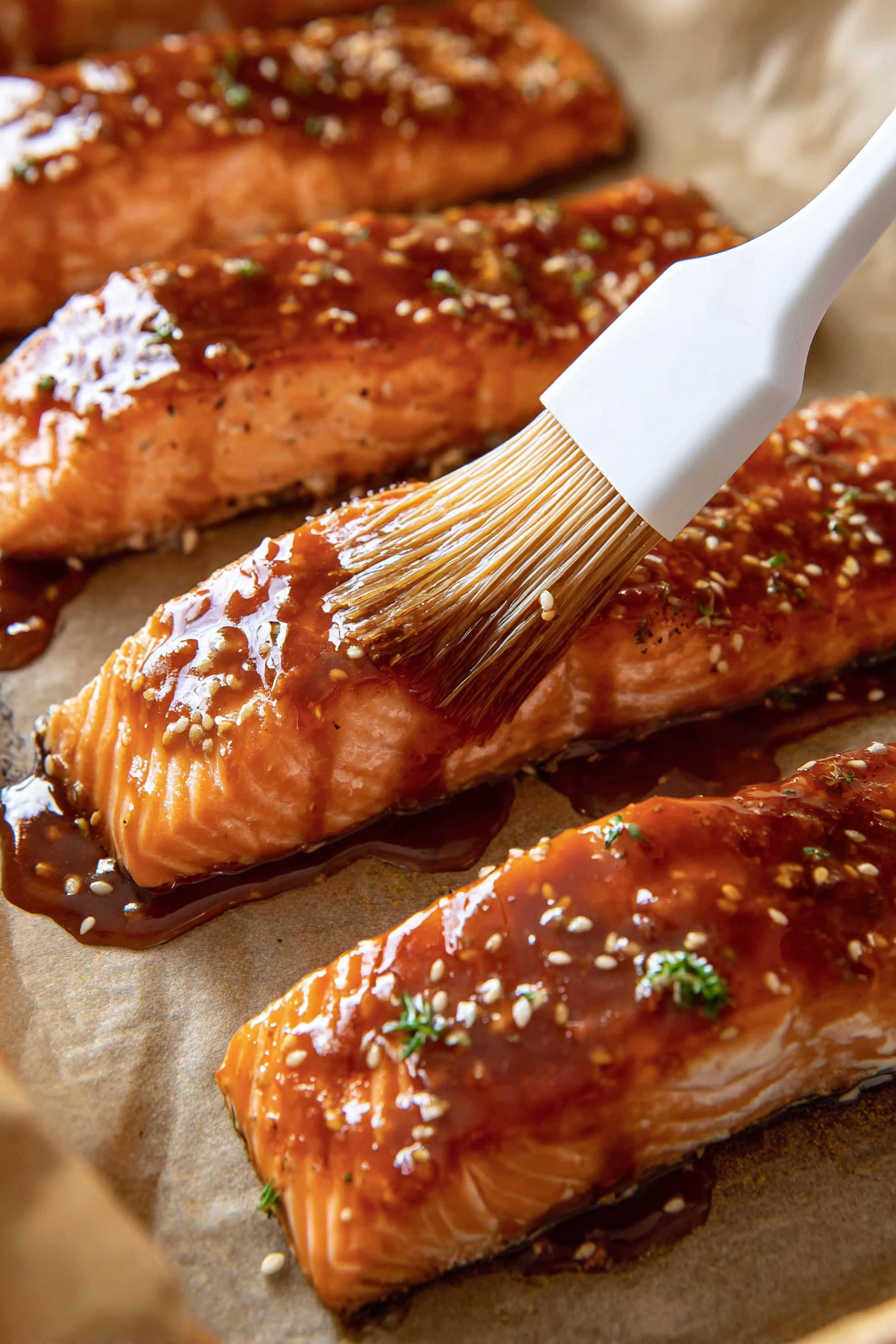
There’s something comforting about brushing a simple glaze over fresh salmon,
sliding it into the oven, and knowing dinner will be ready in minutes.
As it bakes, the kitchen fills with the warm aroma of honey, garlic, and Dijon,
and you’re rewarded with tender, flaky salmon everyone loves.
Unfussy, dependable, and quietly impressive—
this is the recipe that makes weeknight cooking feel easy.
For the Baked Salmon
- Salmon Fillets – Use skin-on fillets for the best texture and flavor. The skin helps protect the fish while baking and keeps it moist.
For the Honey Dijon Glaze
- Low Sodium Soy Sauce – Adds savory depth without overpowering the salmon. Using low sodium keeps the seasoning balanced.
- Olive Oil – Helps the glaze coat the salmon evenly and keeps the fish tender as it bakes.
- Honey – Brings a touch of natural sweetness that balances the saltiness of the soy sauce and helps the glaze lightly caramelize.
- Dijon Mustard – Adds a subtle tang and richness that ties all the flavors together.
- Garlic – Freshly minced garlic gives the glaze its bold, aromatic backbone.
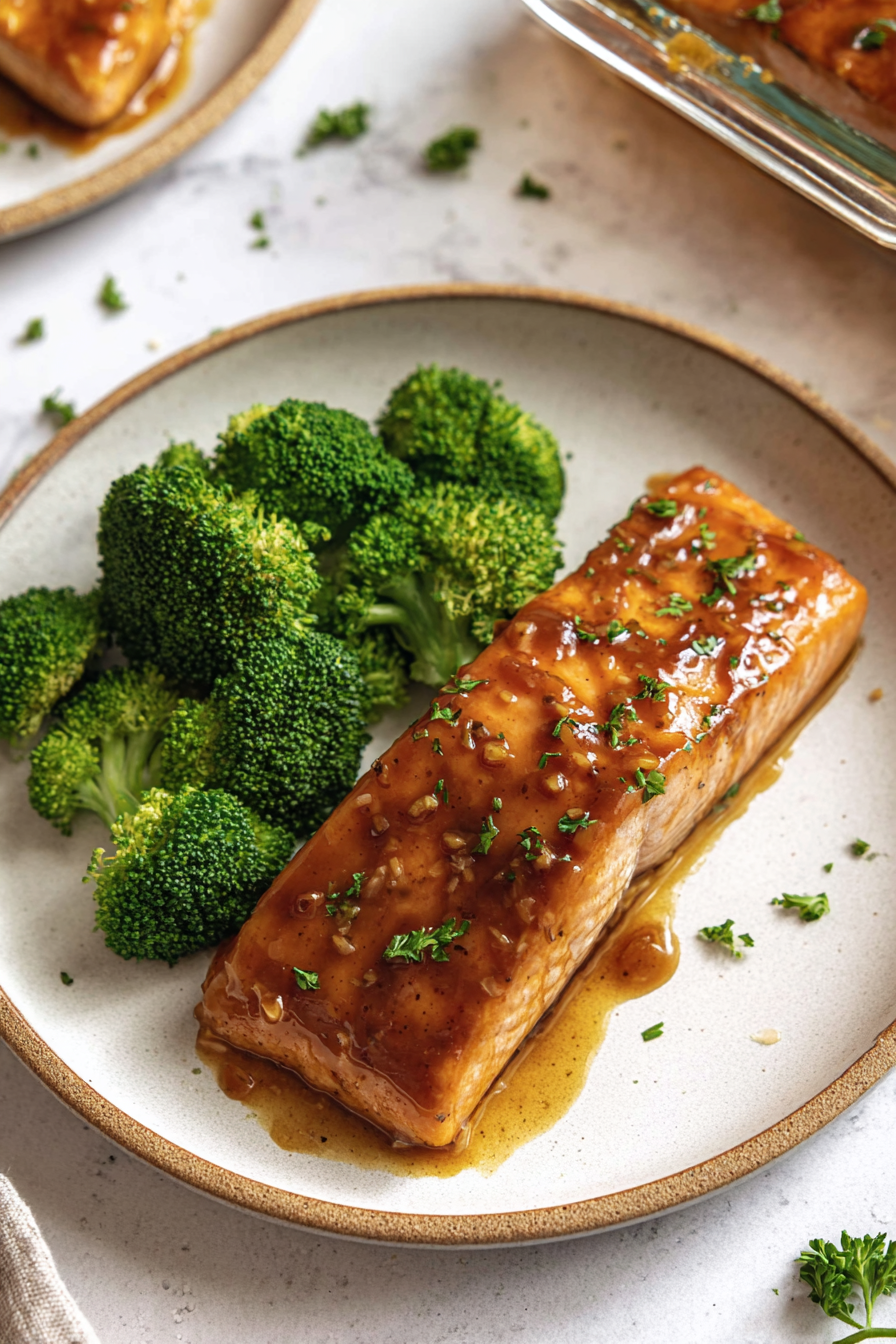
Delicious Oven-Baked Salmon with Honey Dijon Glaze
Notes
Ingredients
- 4 salmon fillets, 6 ounces each, skin on
- 1 ½ tablespoons low sodium soy sauce
- 1 tablespoon olive oil
- 1 tablespoon honey
- 1 ½ teaspoons Dijon mustard
- 2 cloves garlic, minced
Instructions
- Take the salmon out of the refrigerator and allow it to sit at room temperature while you prepare the glaze.
- Heat the oven to 400°F. Line a 9×13-inch baking dish with parchment paper or foil to make cleanup easier.
- In a small bowl, whisk together the soy sauce, olive oil, honey, Dijon mustard, and minced garlic until well combined.
- Arrange the salmon fillets in the prepared dish with the skin facing down. Set aside half of the sauce in a clean bowl. Spoon or brush the remaining sauce evenly over the salmon.
- Place the dish in the oven and bake for 12 minutes. Remove the salmon and brush with the reserved sauce, then return it to the oven.
- Continue baking for an additional 2–8 minutes, depending on thickness, until the salmon flakes easily with a fork. Thicker fillets will require more time than thinner ones.
- For food safety, salmon is considered fully cooked at an internal temperature of 145°F. Some prefer removing it at 125–130°F and allowing it to rest for 3 minutes before serving.
- If you prefer a dry preparation, you can skip the glaze and use a salmon seasoning instead. Simply coat the fish evenly with the seasoning before baking.

1. Do I really need to let the salmon come to room temperature?
Short answer: yes, if you can. Cold salmon straight from the fridge takes longer to cook on the inside, which increases the risk of overcooking the outside. Letting it sit out briefly helps it bake more evenly and stay juicy.
2. Can I make this with skinless salmon?
Absolutely. Skin-on is my preference because it protects the fish and keeps it moist, but skinless works just fine. Just be sure to line the pan with parchment or foil so the salmon doesn’t stick.
3. How do I know when the salmon is done?
Thickness matters here. Thin fillets cook quickly, thicker ones take longer. You’re looking for salmon that flakes easily with a fork. If you like numbers, 145°F is the FDA guideline, but many people prefer pulling it out at 125–130°F and letting it rest.
4. Can I make the sauce ahead of time?
Yes! The glaze can be mixed up earlier in the day (or even the night before). Just give it a quick stir before using. This is a great little shortcut for busy weeknights.
5. My glaze burned on the pan — what went wrong?
Honey has a habit of caramelizing fast. That’s why the sauce is brushed on in stages rather than all at once. Lining the pan helps with cleanup, and don’t worry if a little sauce darkens on the edges — the salmon itself will still be perfect.