Skip to content


Some nights call for a dinner that feels special without requiring much thought.
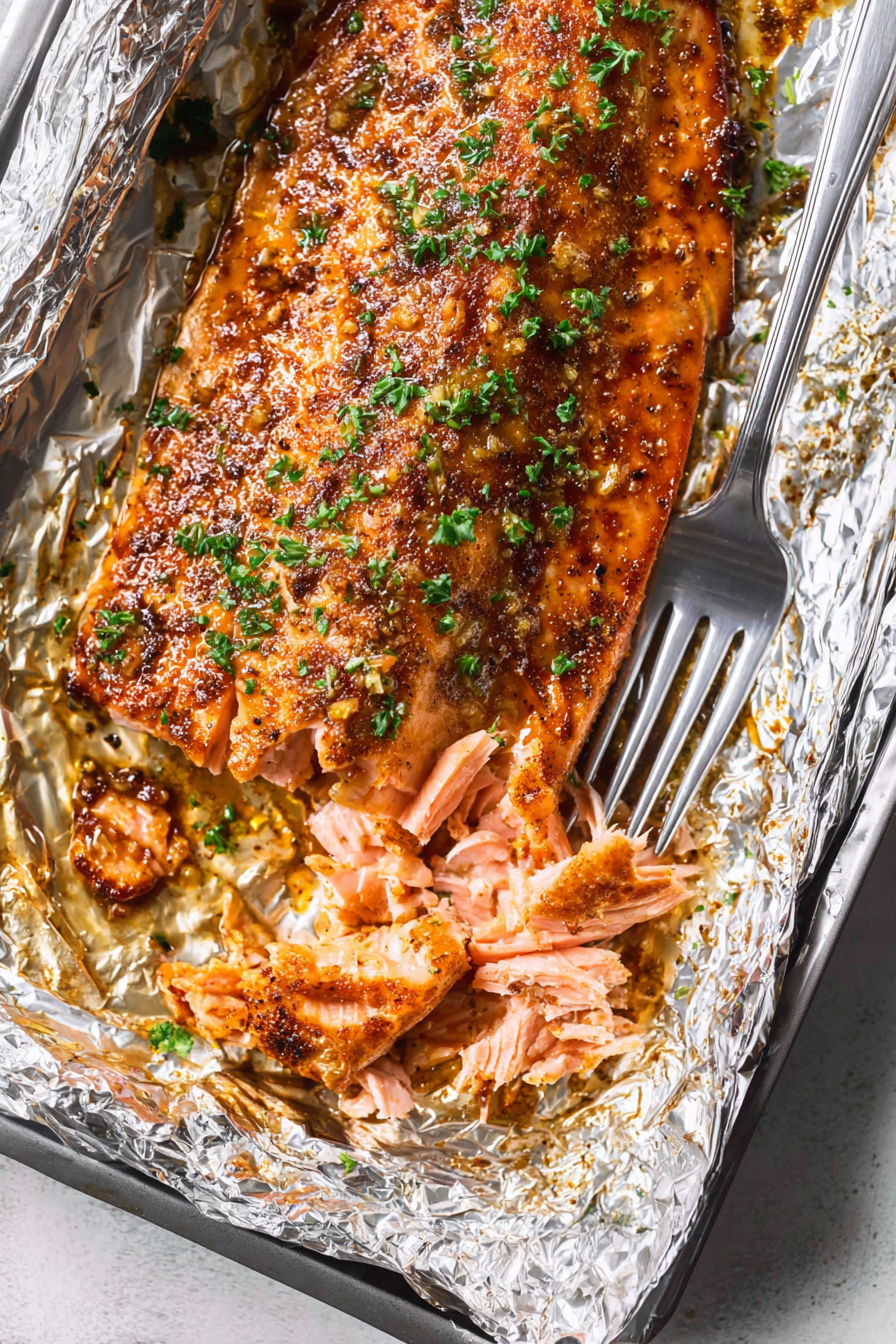
This oven baked salmon has become one of those quiet, reliable favorites in my kitchen.
As it roasts, the butter and garlic melt into the fish while the brown sugar and spices gently caramelize, filling the kitchen with the kind of aroma that makes everyone wander in to ask what’s for dinner.
It’s simple, comforting, and deeply flavorful—made with pantry staples, one pan, and just enough time in the oven to turn a whole salmon fillet perfectly tender and flaky.
This is the kind of recipe you make once and keep coming back to, whether it’s for a relaxed weeknight or an easy meal to share with family.
Why You’ll Love This Recipe
This is one of those recipes that’s almost suspiciously easy for how good it turns out. A handful of pantry staples, one baking tray, and about 20 minutes in the oven is all it takes to transform a simple salmon fillet into something that looks and tastes like you spent far more effort than you actually did.
The garlic butter keeps every bite rich and juicy, while the brown sugar melts into the seasoning to create a lightly caramelised finish that’s completely irresistible. It’s simple enough for a busy Tuesday night, but impressive enough to bring to the table when family or friends are coming over.
Best of all? Hardly any washing up. That’s always a win in my book.
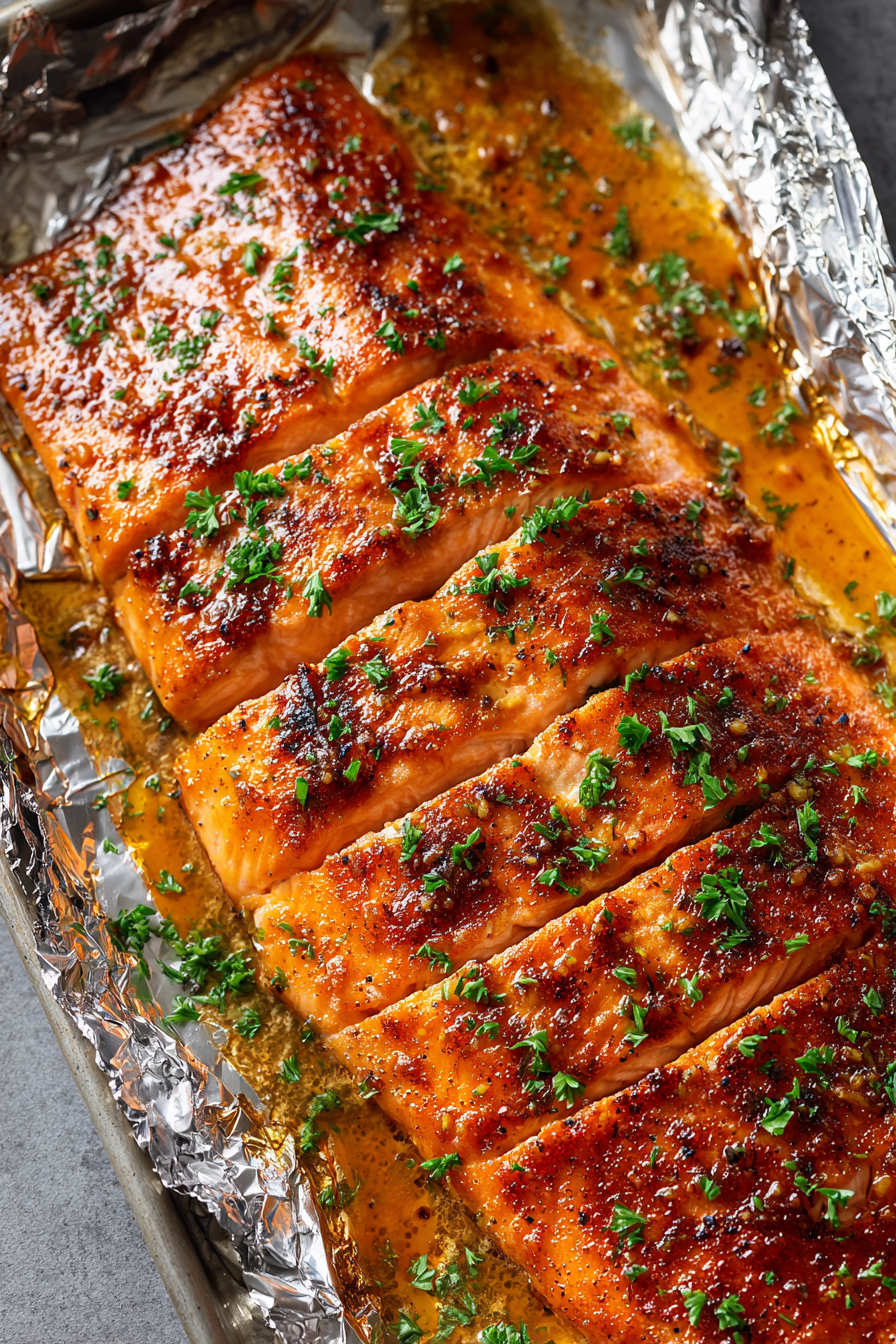
For Oven Baked Salmon
- Salmon Fillet – A whole, skin-on fillet works best because it cooks evenly and stays moist. It’s also harder to overcook than individual portions.
- Butter or Olive Oil – This adds richness and helps carry the garlic and spices across the surface of the salmon as it bakes.
- Garlic – Fresh minced garlic brings bold, savory flavor that mellows and sweetens in the oven.
- Brown Sugar – Just a small amount adds balance and helps create a lightly caramelized crust on top of the salmon.
- Italian Seasoning – A simple blend of dried herbs that adds warmth and depth without overpowering the fish.
- Paprika – Provides subtle smokiness and enhances the salmon’s natural color as it bakes.
- Garlic Powder – Reinforces the garlic flavor and ensures it’s evenly distributed in every bite.
- Salt – Essential for bringing out the flavors of both the salmon and the seasoning blend.
- Black Pepper – Adds gentle heat and rounds out the overall seasoning.
Step-by-Step Instructions
1. Prepare the baking tray
Start by heating your oven to 375°F. Line a rimmed baking tray with foil, then place the salmon on top with the skin side down. Fold the foil slightly around the edges of the fish to create a shallow tray that keeps all those buttery juices exactly where you want them.
2. Build the flavour
Mix the minced garlic into the melted butter, then brush about half over the salmon. Stir together the brown sugar, Italian seasoning, paprika, garlic powder, salt and black pepper, then sprinkle the mixture evenly across the fish. Finish by drizzling over the remaining garlic butter so every bite gets coated.
3. Bake until perfectly flaky
Bake the salmon for 15 to 22 minutes, depending on the thickness of your fillet and how you like it cooked. If you think of it halfway through, spoon some of the buttery pan juices back over the salmon—it adds even more flavour.
4. Let it rest
Once the salmon comes out of the oven, give it 5 minutes to rest before serving. It allows the juices to settle back into the fish so every slice stays beautifully tender and flaky.
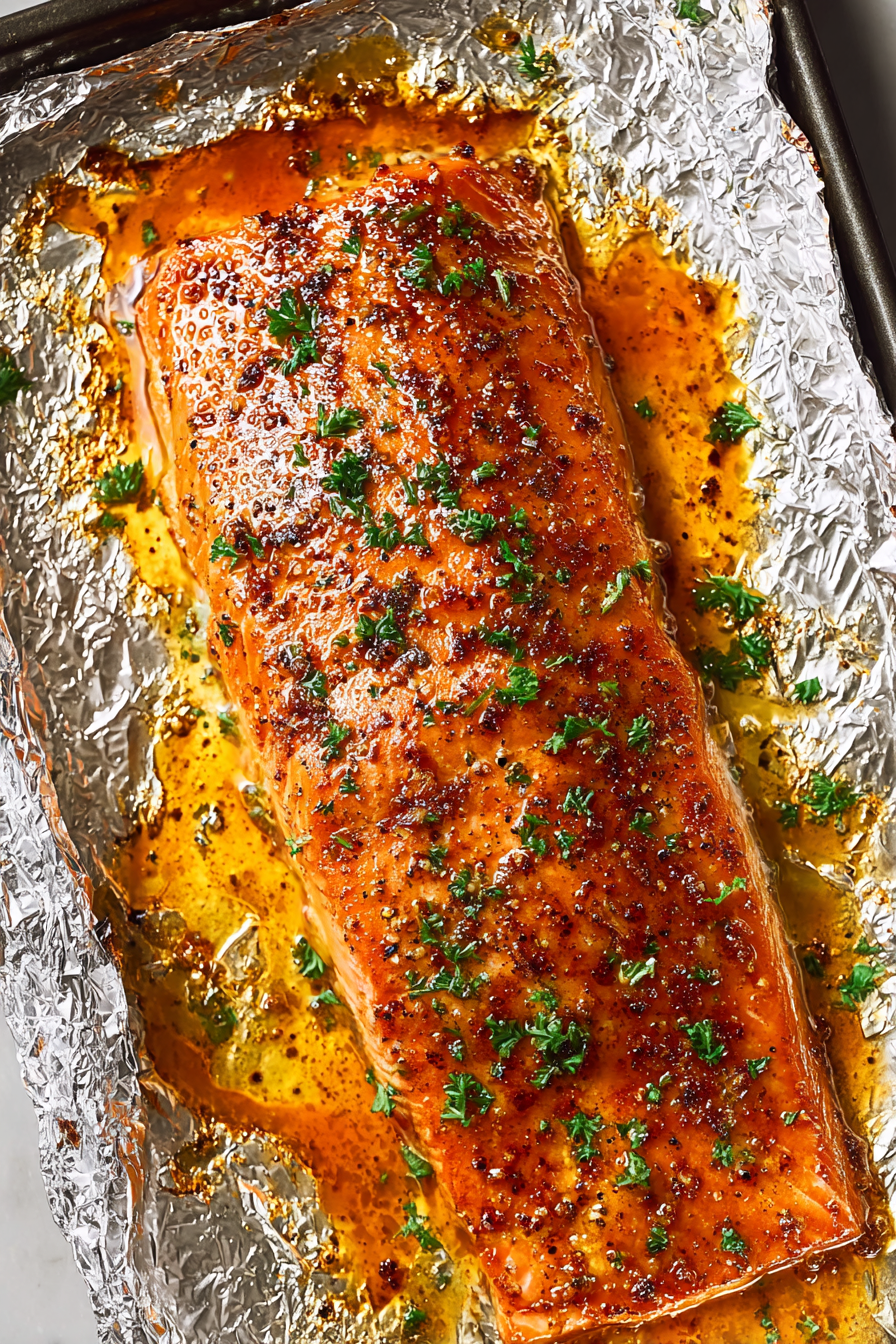
Expert Tips
A whole, skin-on salmon fillet is the best choice here because it cooks more evenly and stays wonderfully juicy from edge to centre.
Let the melted butter cool for a few minutes before stirring in the garlic. It thickens slightly, making it much easier to brush over the salmon instead of running straight off.
Don’t skip the foil. Besides making cleanup incredibly easy, it keeps all the garlic butter and cooking juices around the fish instead of disappearing across the baking tray.
For the most reliable results, cook to temperature rather than time. An instant-read thermometer takes all the guesswork out of perfectly cooked salmon.
If you’re using individual salmon fillets instead of one large side, simply shorten the cooking time to around 10 to 15 minutes.
Recipe Variations
Want a lighter version? Swap the butter for olive oil. You’ll still get plenty of flavour with a slightly lighter finish.
Prefer your salmon completely savoury? Reduce the brown sugar or leave it out altogether. The garlic and herbs still make an excellent seasoning.
Italian seasoning can easily be replaced with dried oregano or rosemary if that’s what you already have in the cupboard.
If you enjoy a little heat, add a pinch of crushed red pepper flakes or cayenne to the seasoning blend.
For a fresh finishing touch, scatter chopped parsley or dill over the salmon just before serving, or add a few lemon wedges alongside for squeezing over each portion.
Storage & Reheating
Leftover salmon keeps beautifully, making it perfect for lunches the next day.
Store any leftovers in an airtight container in the refrigerator for 2 to 3 days.
When it’s time to reheat, place the salmon in a 300°F oven until warmed through. The gentle heat keeps it moist without drying it out. A microwave will certainly work if you’re in a hurry, but the oven gives the best texture.
You can also freeze cooked salmon for up to 2 months. Defrost overnight in the refrigerator before reheating gently.
Serving Suggestions
This salmon is wonderfully versatile, which means it pairs with just about anything.
Serve it with roasted asparagus, broccoli or green beans for an easy vegetable side, or spoon it over fluffy rice or quinoa to soak up every drop of the garlic butter.
For something a little heartier, pair it with creamy mashed potatoes or crispy roasted baby potatoes.
A crisp green salad with a light vinaigrette balances the richness of the salmon beautifully, while warm crusty bread is perfect for mopping up every last bit of the buttery pan sauce. Trust me—you won’t want to waste any of it.

Common Questions About Garlic Butter Brown Sugar Oven Salmon
Can I use individual salmon fillets instead of a whole side?
Absolutely. I often use a whole fillet because it stays juicier and is harder to overcook, but individual fillets work just fine. Just keep in mind they’ll cook faster—around 10 to 15 minutes depending on thickness.
How do I know when the salmon is cooked properly?
The safest way is to use a thermometer. Official guidelines say 145°F, but many people (myself included) prefer salmon cooked to 125–130°F for a more tender, flaky result. Pull it out as soon as it hits your comfort zone—salmon waits for no one once it’s done!
Can I leave out the brown sugar or Italian seasoning?
Yes, this recipe is flexible. The brown sugar adds a gentle sweetness and helps with caramelisation, but you can reduce it or skip it altogether. No Italian seasoning? Swap in oregano or rosemary, or just leave it out—it’ll still be delicious.
Is foil really necessary?
Not strictly, but it makes life much easier. Foil keeps the garlic butter from escaping, helps prevent drying, and saves you from scrubbing baked-on juices later. If you prefer not to use foil, parchment paper is a good alternative—just expect a bit more cleanup.
Can I make this ahead or reheat leftovers?
Yes! Leftovers keep well in the fridge for 2–3 days. To reheat, do it gently—a low oven (around 300°F) is best so the salmon stays moist. Avoid the microwave if you can; it tends to dry fish out quickly.


The Best Garlic Butter Brown Sugar Oven Salmon
Notes
Ingredients
- 1 (2-pound) whole salmon fillet, skin-on preferred
- 3 tablespoons melted butter OR olive oil
- 2 cloves garlic, minced
- 1 tablespoon brown sugar
- 1 teaspoon Italian seasoning
- 1 teaspoon ground paprika
- 1 teaspoon garlic powder
- ¾ teaspoon salt
- Ground black pepper, to taste
Instructions
- Prepare the oven and pan
Preheat the oven to 375°F. Line a rimmed baking sheet with a large sheet of foil. Place the salmon on the foil with the skin facing down. Fold the foil edges up around the fish to form a shallow packet that will catch the juices. - Season the salmon
Stir the minced garlic into the melted butter. Brush half of this mixture evenly over the salmon. In a small bowl, mix together the brown sugar, Italian seasoning, paprika, garlic powder, salt, and black pepper. Sprinkle the seasoning evenly over the fish, then drizzle with the remaining garlic butter. - Bake
Place the salmon in the oven and bake for 15–22 minutes, depending on how done you prefer it (see temperature notes below). If desired, spoon the pan juices over the salmon halfway through cooking. Once baked, remove from the oven and let rest for 5 minutes before serving.
- Salmon: A whole skin-on fillet is recommended because it cooks more evenly and is less likely to dry out than individual portions. If using four separate fillets, reduce baking time to 10–15 minutes.
- Garlic: If fresh garlic isn’t available, substitute with an additional 1 teaspoon garlic powder.
- Italian seasoning: This adds depth, but you can omit it or replace it with another dried herb such as oregano or rosemary.
- Mixing the garlic into freshly melted butter enhances its flavor. Let the butter cool for about 5 minutes so it thickens slightly and brushes on more easily.
- Skipping foil will increase cleanup and may cause more butter to evaporate as it spreads across the pan.
- Approximate internal temperatures for a whole fillet:
- 15 minutes ≈ 125°F
- 20 minutes ≈ 140°F
- 22 minutes ≈ 145°F
- USDA-recommended minimum internal temperature for fish: 145°F
- For a more tender and juicy result, many cooks prefer salmon at 125–130°F, which is still flaky but much more succulent.