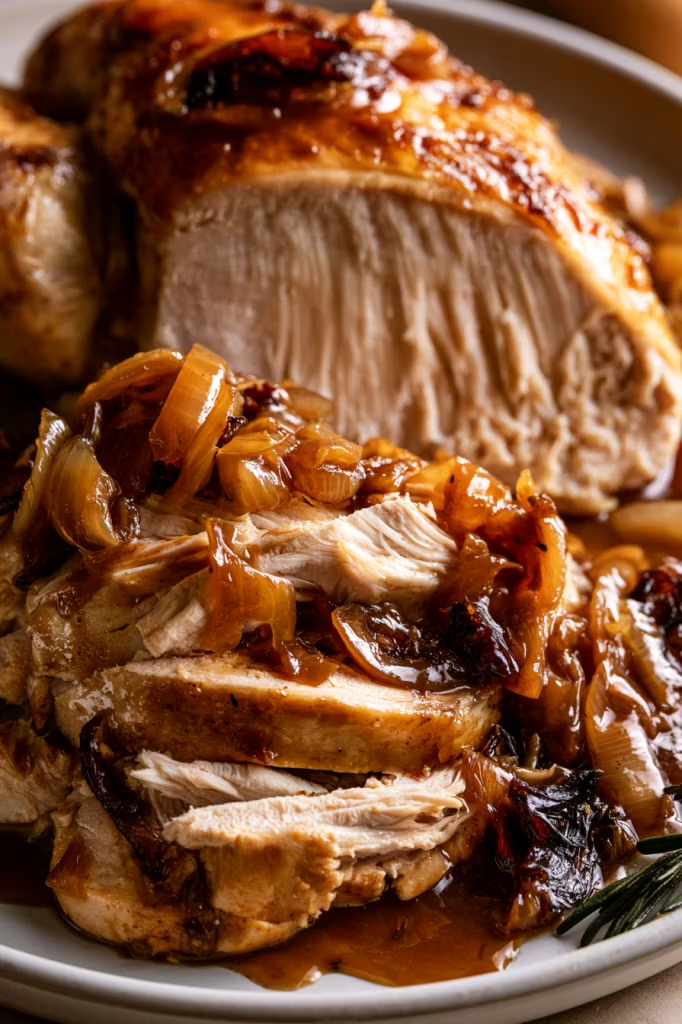
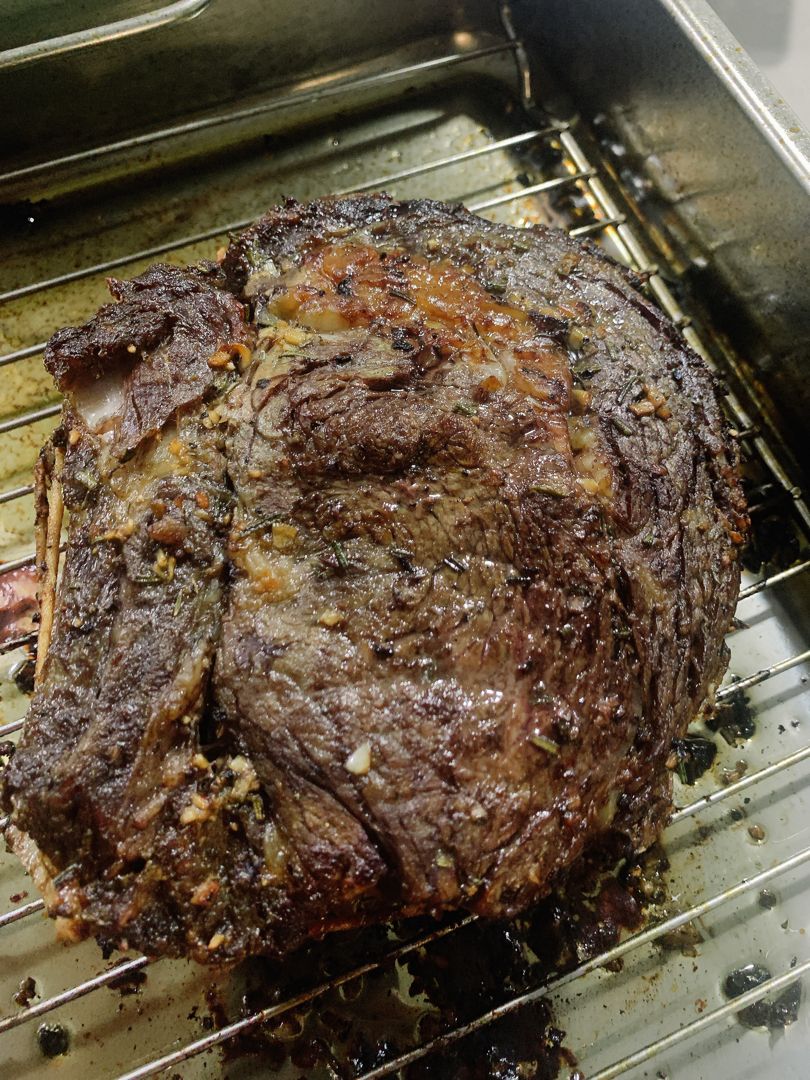
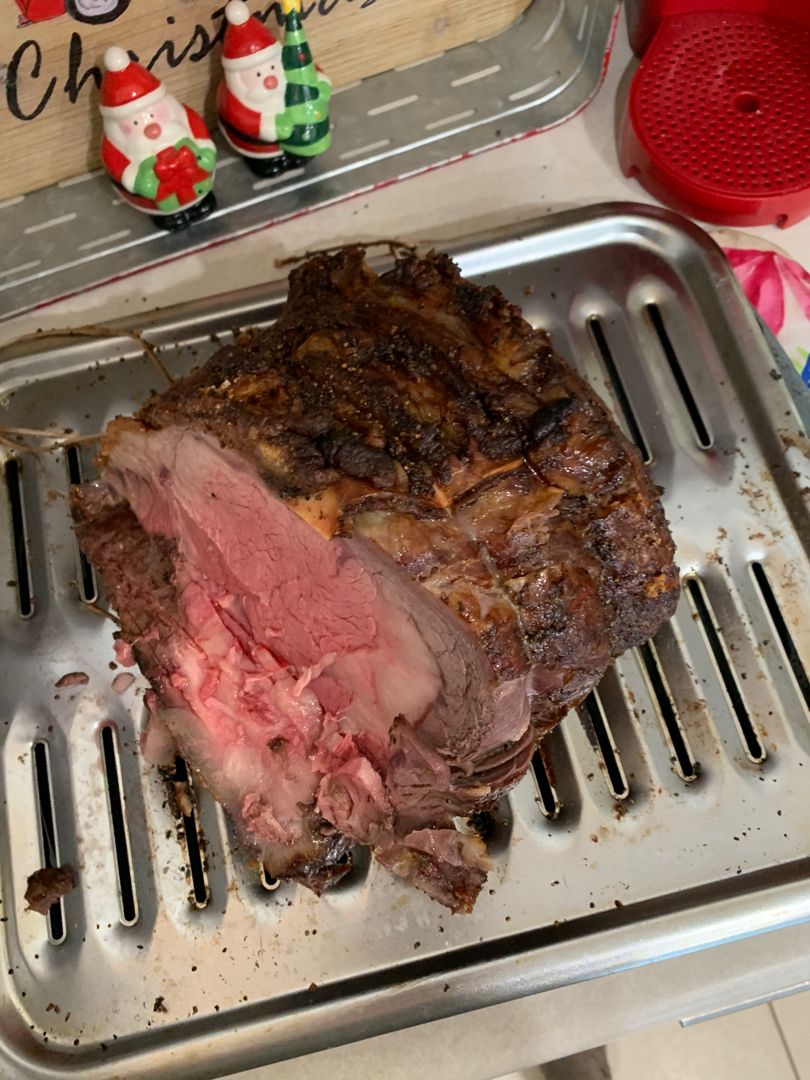
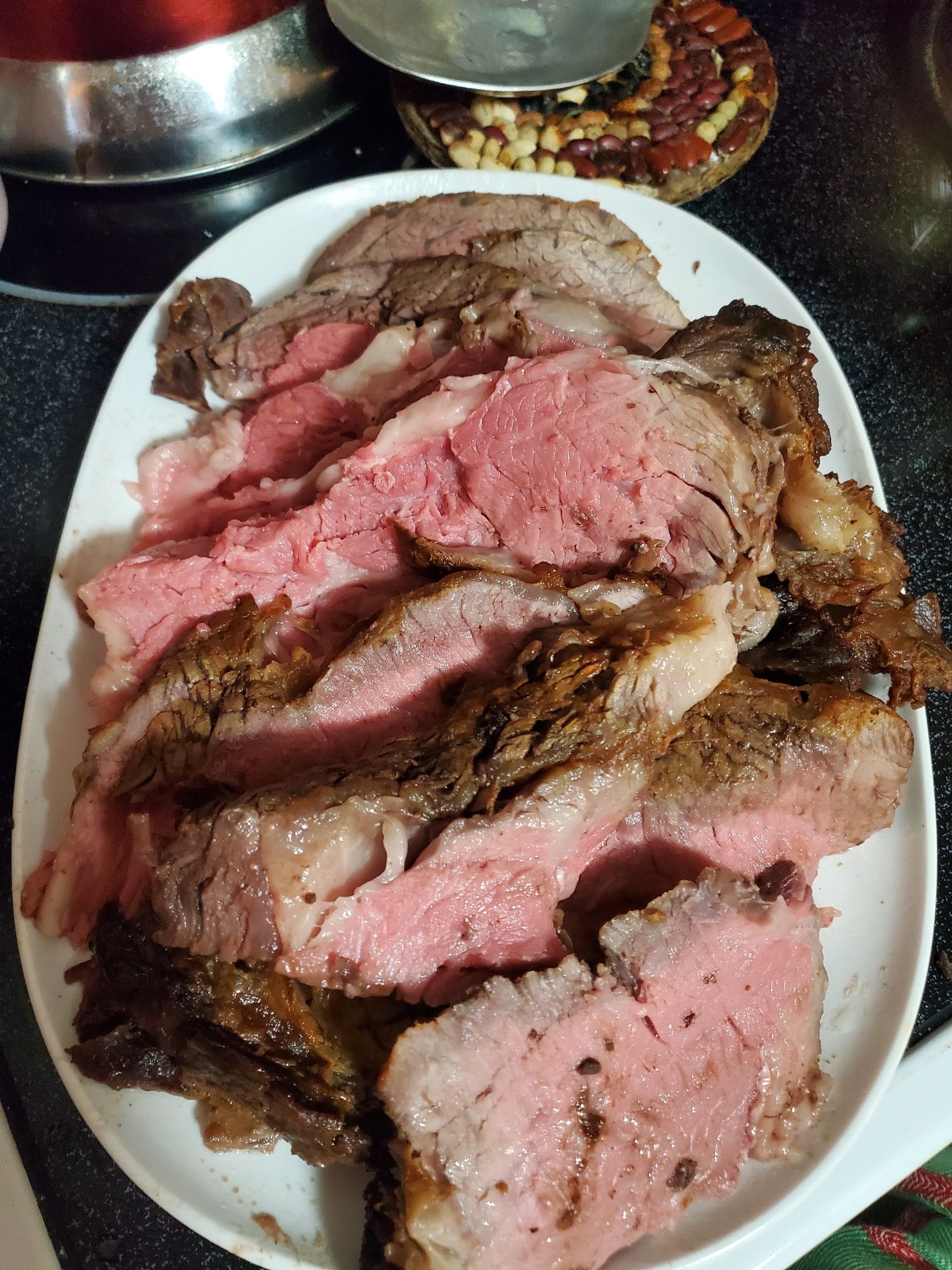
Juicy, rosy-pink prime rib from edge to edge, with a deep brown, crackly crust on the outside.
This prime rib roast is cooked low and slow, then finished in a screaming hot oven, and all it needs is salt, pepper and a thermometer.
Let’s talk about what goes wrong with prime rib. The usual way is to sear it first and roast it hot. The result? A thick grey band of overcooked meat around the outside and only a little circle of pink in the middle. For such an expensive cut, that’s heartbreaking.
This method flips it around. It’s called the reverse sear. The roast goes into a very low oven first, so it cooks gently and evenly all the way through. Then it rests, and right before serving it goes into a blazing hot oven to build the crust. You get pink from edge to edge, a gorgeous browned exterior, and seriously juicy slices.
It’s the centrepiece Christmas dinner deserves, and it’s surprisingly relaxed. The slow roast is hands-off, and the long resting window gives you time to sort out the sides.
Why You’ll Love This Prime Rib Roast
- Edge-to-edge pink: the low oven cooks the meat evenly, with no grey band.
- Crisp, browned crust: a final blast of high heat gives you that steakhouse exterior.
- Just salt and pepper: the beef is the star, so there’s nothing to hide it.
- Flexible timing: the roast can rest for 30 minutes up to 1 1/2 hours, which makes dinner much less stressful.
- Works for any size: from a 2-rib roast for a small group to 6 ribs for a crowd.
- Holiday-worthy: a showstopper for Christmas, New Year’s or any special dinner.
Ingredient Notes & Easy Substitutions
Standing rib roast (prime rib) – This is the whole show. Anything from 2 to 6 ribs works. Plan on about 1 pound of bone-in roast per guest, with each rib adding roughly 1 1/2 to 2 pounds. Dry-aged prime-grade or grass-fed beef gives the best results, but this method makes any rib roast better.
Kosher salt – Season generously. A big roast needs a good amount of salt to taste properly seasoned all the way through.
Freshly ground black pepper – Adds a gentle warmth and helps build the crust.
Step-by-Step Guide to Making Prime Rib Roast
1. Set the oven low
Turn the oven to its lowest setting, ideally 150°F. Lots of ovens can’t go below 250°F, and that’s fine. It just means a shorter cook time.
2. Season and set up the roast
Season the roast all over with plenty of salt and pepper. Place it fat side up on a V-rack in a roasting pan, or on a wire rack in a rimmed baking sheet. The rack lets the heat circulate all around the meat.
3. Slow roast to temperature
Roast until the centre hits 120 to 125°F for rare, 130°F for medium-rare, or 135°F for medium to medium-well. This is where the thermometer earns its keep. At 150°F it takes around 5 1/2 to 6 1/2 hours, and at 250°F around 3 1/2 to 4 hours. Go by the temperature, not the clock.
4. Rest while the oven heats up
Pull the roast out, cover it loosely with foil and let it rest somewhere warm for 30 minutes to 1 1/2 hours. Meanwhile, turn the oven up as high as it will go, 500 to 550°F.
5. Sear in the hot oven
About 10 minutes before dinner, remove the foil and put the roast back in the hot oven for 6 to 10 minutes. You’re looking for a deep brown, crisp crust all over. Then carve it and serve right away, while that crust is at its best.
Reverse-Seared Prime Rib Roast
Equipment
- Large roasting pan with V-rack (or wire rack set in a rimmed baking sheet)
- Instant-read thermometer
- Aluminum foil
Ingredients
- 1 standing rib roast (prime rib) 3 to 12 pounds (1.3 to 5.4 kg), see Note 1
- kosher salt to season generously
- freshly ground black pepper to season generously
Instructions
- Set the oven to its lowest temperature, ideally 150°F (66°C). Some ovens can't hold anything lower than 250°F (121°C), so use the lowest it can manage.
- Season the roast all over with plenty of salt and pepper.
- Sit the roast fat side up on a V-rack in a large roasting pan, or on a wire rack set in a rimmed baking sheet.
- Roast until the very centre reads 120 to 125°F (49 to 52°C) on an instant-read thermometer for rare, 130°F (54°C) for medium-rare, or 135°F (57°C) for medium to medium-well. At 150°F this takes about 5 1/2 to 6 1/2 hours; at 250°F, about 3 1/2 to 4 hours.
- Take the roast out, cover it loosely with foil and leave it somewhere warm to rest for at least 30 minutes and up to 1 1/2 hours. While it rests, crank the oven up as high as it goes, 500 to 550°F (260 to 288°C).
- About 10 minutes before you want to eat, remove the foil and return the roast to the hot oven for 6 to 10 minutes, until the outside is deep brown and crisp.
- Take it out, carve and serve straight away.
Notes
- Roast size: Works for any roast from 2 to 6 ribs. Allow about 1 pound of bone-in roast per guest; each rib adds roughly 1 1/2 to 2 pounds. Dry-aged prime-grade or grass-fed roasts give the best results.
- Timing: Times depend on your oven and the size of the roast, so go by the thermometer, not the clock.
- Nutrition: Estimated per serving, based on about 1 pound of bone-in roast per guest.
Nutrition
Tips for the Best Prime Rib Roast
- Use an instant-read thermometer: it’s the only reliable way to hit your perfect doneness.
- Check the very centre: push the probe into the thickest part, away from the bone.
- Use a rack: raising the roast lets the heat reach every side.
- Season generously: a big piece of beef needs more salt than you’d think.
- Get the oven really hot for the sear: 500 to 550°F gives a fast crust without overcooking the inside.
- Serve right after searing: the crust is crispest straight out of the oven.
Common Mistakes to Avoid
- Cooking by time alone: ovens and roasts vary. Always cook to temperature.
- Skipping the rest: rest it for at least 30 minutes before the final sear.
- Not preheating fully for the sear: a lukewarm oven won’t brown the crust in 6 to 10 minutes.
- Searing too early: do the final blast about 10 minutes before you’re ready to eat, not before the guests arrive.
- Underseasoning: salt and pepper are the only flavourings, so don’t be shy.
Easy Ways to Change It Up
The recipe card is the classic salt-and-pepper version. These are optional ideas that haven’t been tested with this recipe, so treat them as your own twist:
- Garlic herb rub: rub the roast with minced garlic, rosemary and thyme along with the salt and pepper.
- Garlic butter to serve: melt butter with garlic and herbs and spoon it over the carved slices.
- Peppercorn crust: use coarsely cracked peppercorns for a bolder crust.
- Horseradish cream: serve with a creamy horseradish sauce on the side.
How to Serve Prime Rib Roast
Carve it into thick slices at the table for maximum drama. Classic sides include mashed potatoes, Yorkshire puddings, roasted vegetables, creamed spinach and green beans. A spoonful of horseradish sauce or a simple jus on the side is lovely. A bold red wine makes it a proper celebration dinner.
Make-Ahead and Storage Tips
- Built-in flexibility: the rest can last up to 1 1/2 hours, so the slow roast can finish well before dinner.
- Leftovers: wrap tightly and refrigerate. Like most cooked beef, it’s best eaten within a few days.
- Reheating: warm slices gently in a low oven so they don’t overcook and turn grey.
- Using leftovers: thin slices make fantastic steak sandwiches.
Frequently Asked Questions
How much prime rib roast do I need per person?
Plan on about 1 pound of bone-in roast per guest. Each rib adds roughly 1 1/2 to 2 pounds.
What temperature should prime rib be for medium-rare?
Take it out of the low oven when the centre reaches 130°F for medium-rare. For rare, 120 to 125°F, and for medium to medium-well, 135°F.
How long does prime rib take in the oven?
In a 150°F oven, about 5 1/2 to 6 1/2 hours. In a 250°F oven, about 3 1/2 to 4 hours. Then it rests, and gets a 6 to 10 minute sear. Always go by the thermometer.
Do I need to rest prime rib?
Yes. Rest it for at least 30 minutes, and up to 1 1/2 hours, loosely covered with foil before the final sear.
What if my oven won’t go down to 150°F?
Use the lowest setting your oven can hold. At 250°F the roast takes around 3 1/2 to 4 hours to reach temperature.
If you’ve ever been nervous about cooking a prime rib roast, this method takes the guesswork out. Low and slow for even pink meat, then a quick blast of heat for that gorgeous crust.
All you need is good beef, salt, pepper and a thermometer. Your holiday table will thank you.