Skip to content


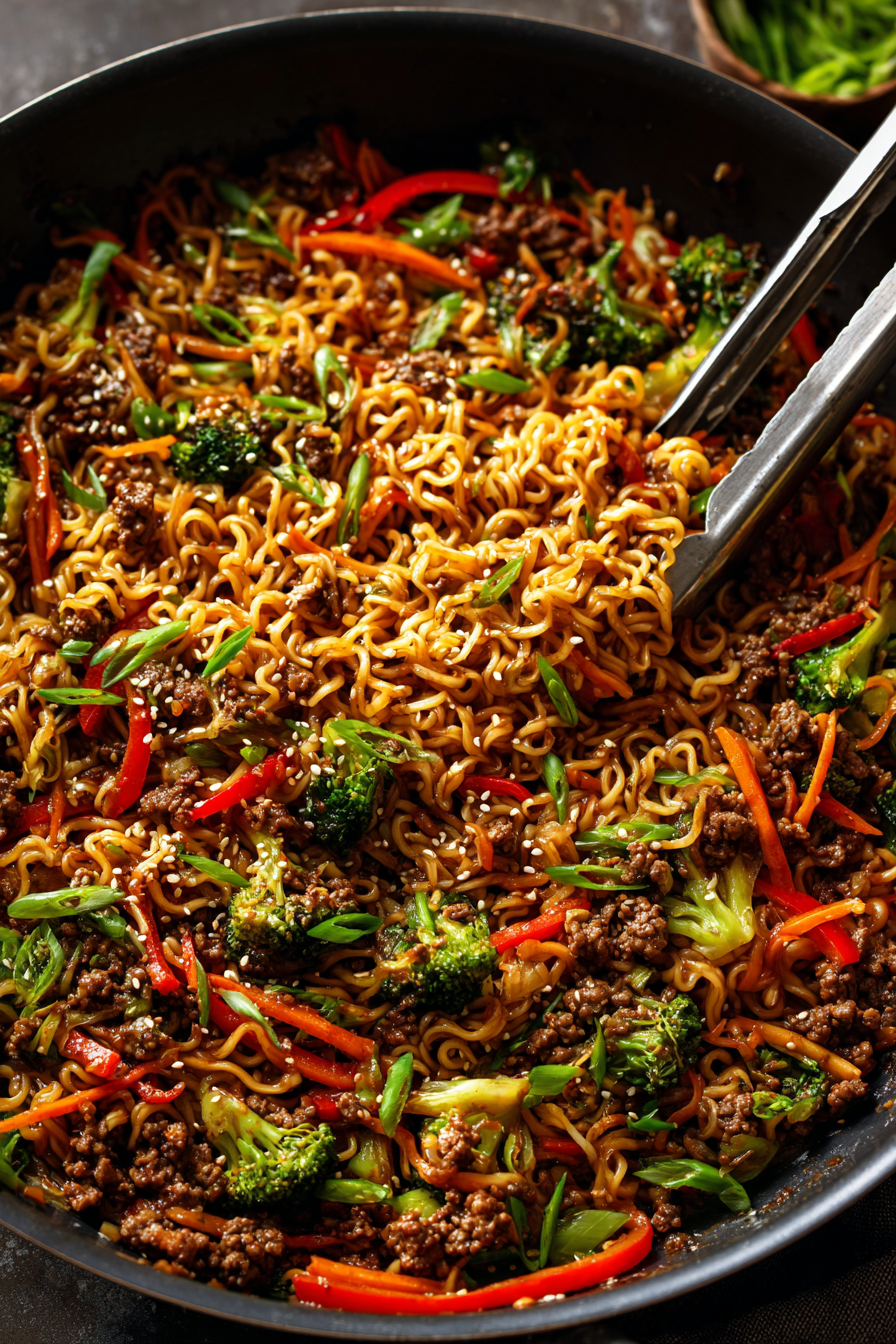
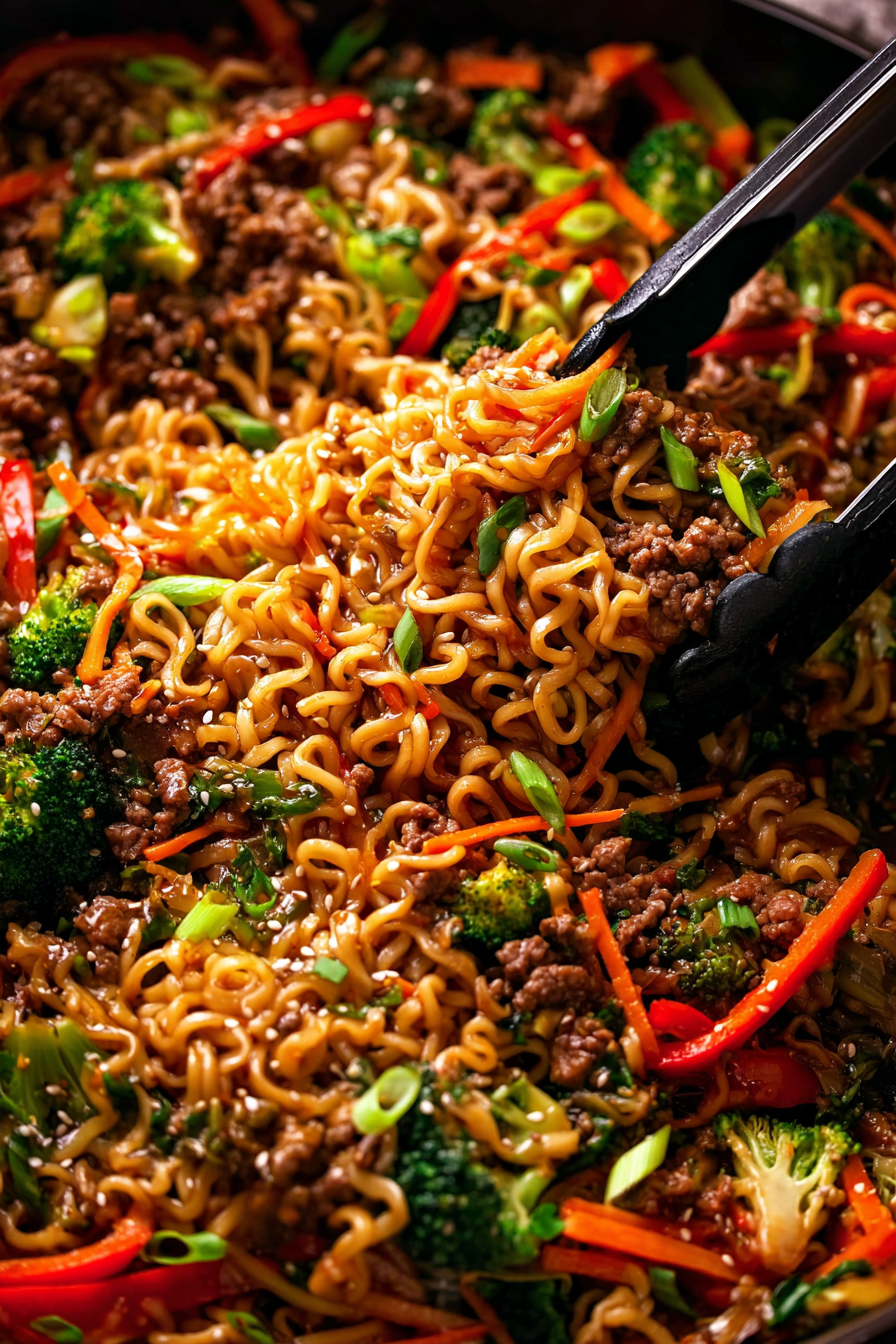 On nights when you want something warm, comforting, and deeply satisfying—but don’t want to spend hours in the kitchen—this ground beef ramen is exactly what you reach for.
As the noodles cook and the beef sizzles, the kitchen fills with the savory aroma of garlic, ginger, and toasted sesame oil.
Crisp vegetables soften just enough, the sauce turns glossy and rich, and suddenly dinner feels both effortless and special.
It’s the kind of cozy, weeknight meal you’ll crave again the moment the bowls are empty.
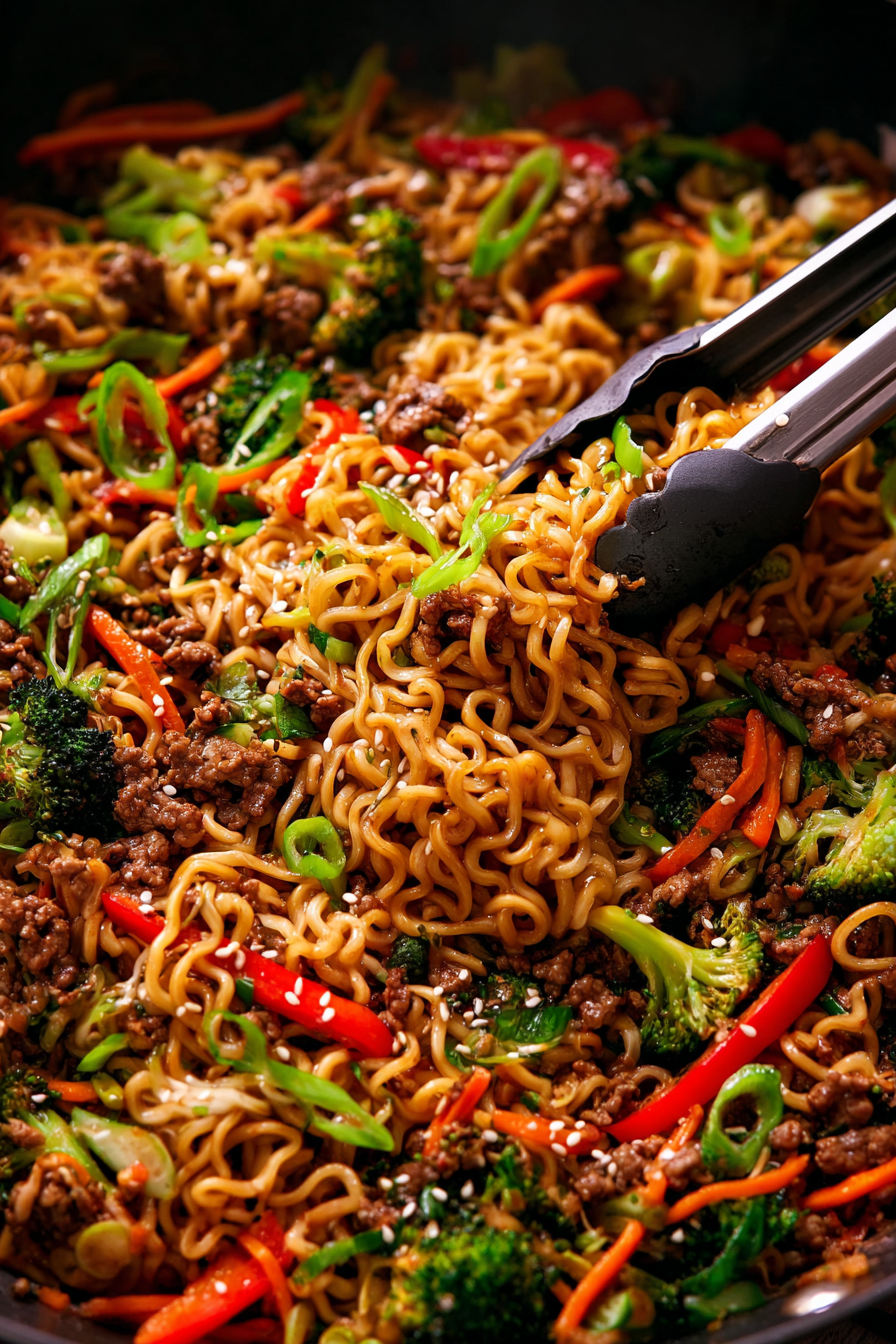
For the Ground Beef Ramen
- Ground Beef – Lean ground beef keeps the dish hearty without being greasy and absorbs the sauce beautifully.
- Ramen Noodles – These cook quickly and soak up the savory sauce, making the dish comforting and satisfying.
- Red Onion – Adds a mild sweetness and depth once sautéed.
- Red Bell Pepper – Brings color, light sweetness, and a tender crunch.
- Broccoli – Adds texture and freshness while balancing the richness of the beef.
- Matchstick Carrots – Slightly sweet and crisp, they help round out the vegetables.
- Garlic and Ginger – This duo builds the base flavor and gives the dish its signature warmth and aroma.
- Toasted Sesame Oil – Adds nutty richness and ties all the flavors together.
For the Sauce
- Soy Sauce – The salty, umami backbone of the sauce. Reduced-sodium works best to keep flavors balanced.
- Chicken Broth – Thins the sauce just enough while adding savory depth.
- Brown Sugar – Adds subtle sweetness to balance the salty and savory elements.
- Hoisin Sauce – Brings a slightly sweet, complex flavor that gives the sauce body.
- Oyster Sauce – Adds richness and deep umami that makes the dish taste restaurant-worthy.
- Rice Vinegar – Brightens the sauce and cuts through the richness.
- Cornstarch – Thickens the sauce so it clings perfectly to the noodles and beef.
- Sriracha (Optional) – Adds a gentle kick of heat for those who like a little spice.
- White Pepper – Gives a soft, earthy heat without overpowering the dish.
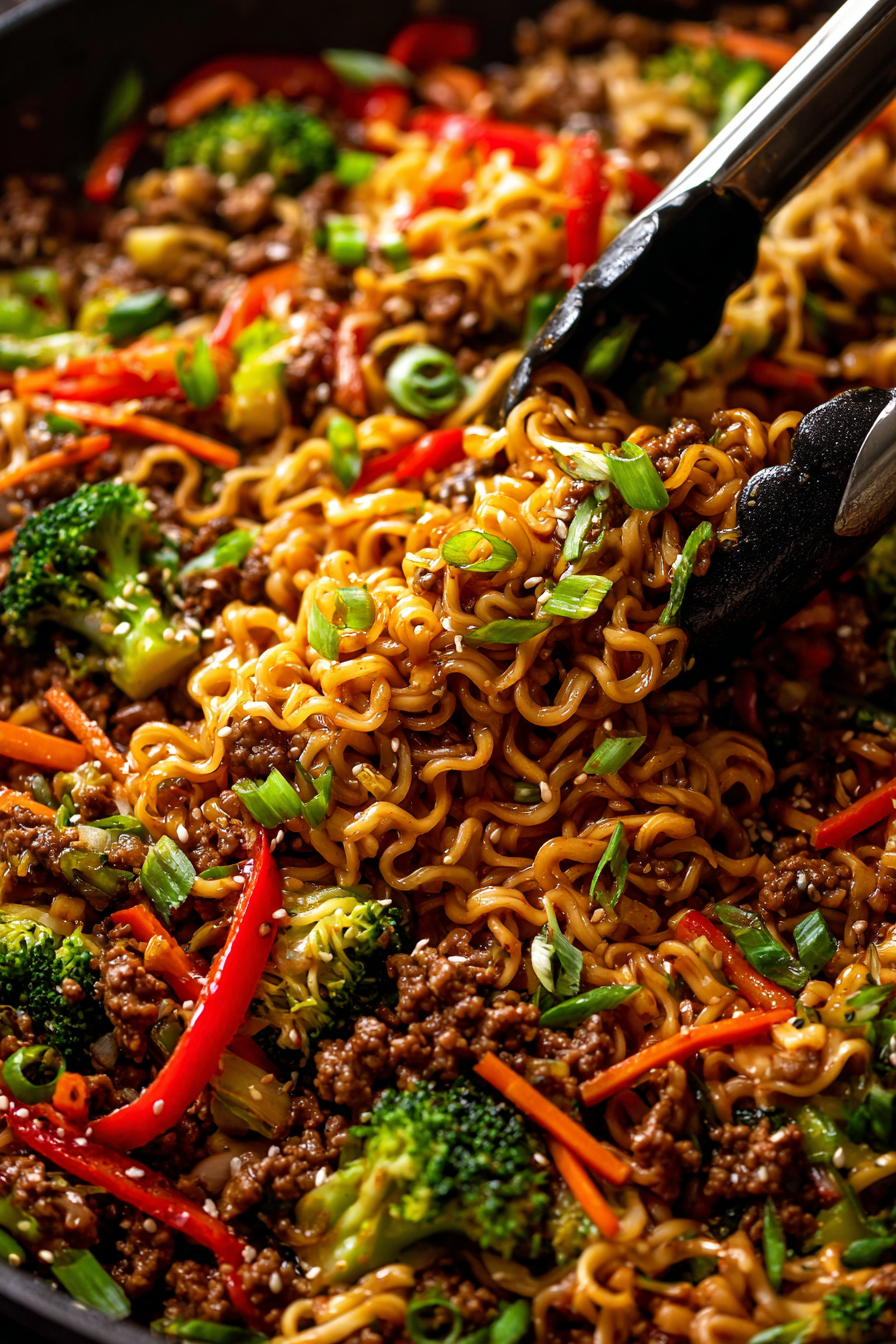
How To Make The Best Ground Beef Ramen
Notes
Ingredients
- 4 tablespoons toasted sesame oil, divided
- 1/2 large red onion, very thinly sliced
- 1 tablespoon garlic paste
- 2 teaspoons ginger paste
- 1 pound lean ground beef (93/7)
- 1 large red bell pepper, cut into thin strips
- 2 cups finely diced broccoli
- 3/4 cup matchstick carrots
- 3 (3-ounce) packages instant ramen noodles, seasoning packets discarded
Sauce
- 2 teaspoons cornstarch
- 3 tablespoons reduced-sodium soy sauce
- 1/3 cup reduced-sodium chicken broth
- 1 tablespoon light brown sugar
- 1 tablespoon rice vinegar
- 1 tablespoon hoisin sauce
- 2 tablespoons oyster sauce
- 1 teaspoon Sriracha (optional)
- 1/4 teaspoon ground white pepper (or 1/8 teaspoon black pepper)
- Optional garnish (see Note 1)
Instructions
- In a small bowl or wide-mouth jar, combine the cornstarch and soy sauce and whisk until no lumps remain. Pour in the chicken broth, brown sugar, rice vinegar, hoisin sauce, oyster sauce, Sriracha if using, white pepper, and 1 tablespoon of the sesame oil. Whisk until smooth and set aside.
- Prepare all vegetables before cooking: thinly slice the onion and bell pepper, finely chop the broccoli, measure out the carrots, slice the green onions, and mince the garlic and ginger if not using paste.
- Place a large wok or deep pan over medium-high heat and add 1 tablespoon sesame oil. Once hot, add the onion and cook for about 4 minutes until softened. Push the onions to the outer edges of the pan. Increase heat to high, add another tablespoon of oil, and place the ground beef in the center. Let it sit undisturbed for 30 seconds, then break it apart with a wooden spoon. Cook for 5–7 minutes until no longer pink (it does not need to be fully cooked at this stage).
- While the beef cooks, bring a large pot of water to a boil without adding salt. Discard the ramen seasoning packets. Cook the noodles for 1 minute and 30 seconds less than the package directions. Drain well, toss with 1 tablespoon sesame oil, and set aside.
- Lower the heat under the beef mixture to medium-high. Add the bell pepper, broccoli, carrots, garlic, and ginger. Stir-fry for 3–4 minutes, just until the vegetables are tender but still crisp.
- Give the sauce another quick stir, then pour it into the pan along with the cooked noodles. Using tongs, toss everything together for 2–4 minutes until the sauce thickens slightly and coats the noodles evenly. The vegetables should retain a light crunch.
- Taste and adjust seasoning as needed with additional soy sauce, Sriracha, or pepper. Finish with green onions and any optional garnishes. Serve immediately.
Nutrition Calories: 573kcal | Carbohydrates: 72.4g | Protein: 35.3g | Fat: 18.1g | Cholesterol: 67.8mg | Sodium: 1552mg | Fiber: 5.5g | Sugar: 9.1g | Iron: 2mg
- Note 1: Garnish options include sliced green onions, a drizzle of sesame oil, and/or toasted sesame seeds.
- Storage: Transfer leftovers to an airtight container and refrigerate for up to 2 days. Reheat in a skillet or microwave, adding a small splash of water to loosen the sauce.
1. Can I use a different type of noodle?
Absolutely. Instant ramen is fast and convenient, which is why I love it here, but this recipe is very forgiving. Udon, rice noodles, or even spaghetti will work just fine—just cook them according to the packet and stop a little short so they don’t turn mushy once tossed with the sauce.
2. I don’t have garlic or ginger paste—what should I do?
No stress. Fresh works perfectly. Swap in about 1 clove of garlic and 1 teaspoon finely minced ginger for each teaspoon of paste. The flavor will be just as good, if not better.
3. How do I keep the veggies crisp instead of soggy?
High heat is your friend here. Stir-fry the vegetables quickly and don’t walk away—3 to 4 minutes is plenty. They’ll finish cooking once the sauce and noodles go in, so slightly underdone is exactly where you want them.
4. Can I make this gluten-free?
Yes! Use gluten-free ramen or rice noodles, and swap regular soy sauce for tamari or gluten-free soy sauce. Everything else stays the same, and you won’t lose any of that big, savory flavor.
5. Why does my sauce sometimes turn watery?
This usually happens when the cornstarch isn’t fully mixed in. Make sure the sauce is well-whisked before adding it to the pan, then give it a couple of minutes to bubble and thicken with the noodles. That’s when it turns glossy and clings to everything—in the best way.