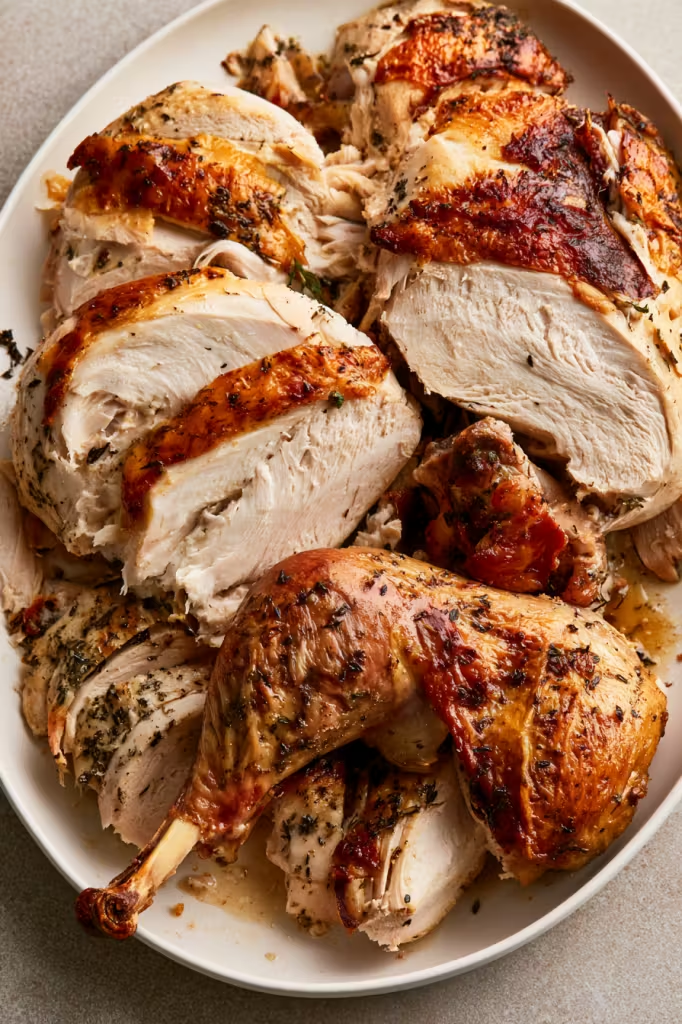
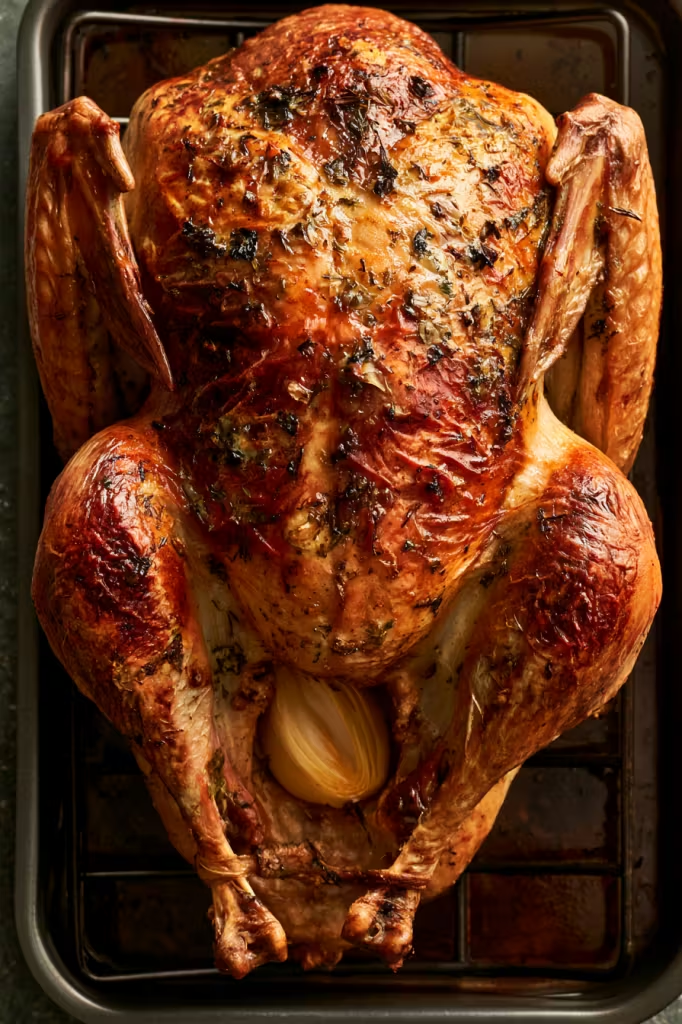
Golden on the outside, juicy in the middle, and filled with the cozy flavors of garlic, rosemary, thyme, and sage, this roasted turkey is exactly the kind of centerpiece I want on a Thanksgiving table.
There’s something special about roasting a turkey for the holidays. The fresh herbs get chopped, the butter gets mixed with plenty of garlic, and before long, the whole kitchen starts to smell like Thanksgiving. And while a whole turkey can feel like a big project, this recipe keeps things surprisingly simple.
There’s no brining and no standing beside the oven to baste the bird over and over again. Instead, herb butter is tucked underneath the skin and brushed all over the turkey, while lemon, onion, apple, and fresh herbs fill the cavity. Then it all goes into the oven until the skin is beautifully browned and the meat is cooked through.
It’s simple, classic, and made for a table full of mashed potatoes, stuffing, gravy, and all your favorite holiday sides.
Why You’ll Love This Recipe
This is the kind of turkey recipe I love for Thanksgiving because it doesn’t make the big day more complicated than it needs to be. A handful of fresh herbs and aromatics do most of the flavor work, and once the turkey is in the oven, there’s very little to fuss with.
The herb butter is my favorite part. Rosemary, thyme, sage, garlic, salt, and pepper are mixed into softened butter, and some of it gets tucked right underneath the breast skin. The rest is brushed generously over the outside, giving the turkey plenty of savory herb flavor and helping the skin turn beautifully golden as it roasts.
And there’s no need for a complicated stuffing inside the bird. A quartered lemon, onion, apple, and the remaining herbs are all you need. They make the turkey wonderfully aromatic without adding much extra work.
Ingredients You’ll Need for This Herb-Butter Turkey
Here’s what each ingredient brings to the turkey:
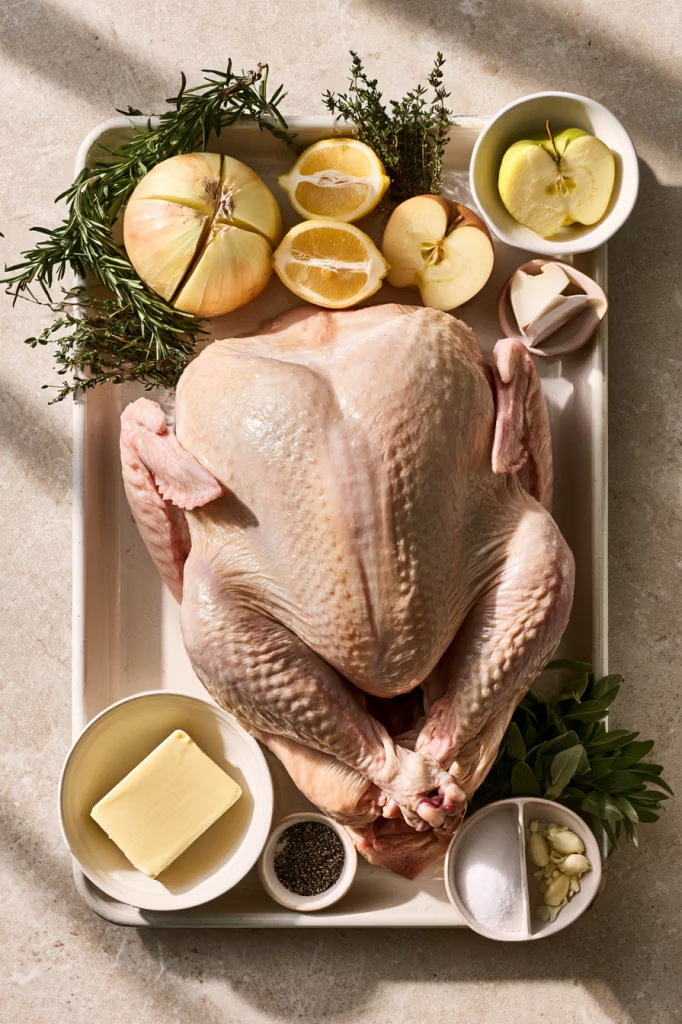
- Turkey – The centerpiece of the recipe. You’ll need a 12–20 pound turkey, which gives you plenty of tender white and dark meat for a holiday meal.
- Onion – Quartered onion goes inside the turkey cavity, where it adds savory flavor and aroma as the bird roasts.
- Lemon – The quartered lemon adds a fresh, bright note that balances the richer butter and turkey.
- Apple – Use your favorite kind. The apple roasts inside the cavity along with the onion, lemon, and herbs, adding a subtle touch of sweetness.
- Fresh Rosemary – Rosemary has a bold, woodsy flavor that works especially well with roasted turkey. Some goes into the herb butter, and the rest is used inside the cavity.
- Fresh Thyme – Adds an earthy, savory flavor without overpowering the turkey. Like the rosemary, it’s used in both the herb butter and the cavity.
- Fresh Sage – Sage gives the turkey that cozy, classic holiday flavor. It pairs beautifully with the rosemary, thyme, garlic, and butter.
For the Herb Butter
- Unsalted Butter – Softened butter forms the base of the herb mixture. It’s spread underneath the breast skin and brushed over the outside of the turkey for richness, flavor, and beautiful browning.
- Salt – Seasons the herb butter and brings out the flavors of the garlic and fresh herbs.
- Freshly Ground Black Pepper – Adds a little warmth and savory depth to the butter mixture.
- Garlic – You’ll use 6–8 minced cloves, so there’s plenty of garlic flavor throughout the herb butter.
- Fresh Chopped Herbs – Rosemary, thyme, and sage are chopped and mixed into the butter, creating the fragrant herb coating that flavors the turkey as it roasts.
Step-by-Step Instructions
First, make sure your turkey is completely thawed. If it’s frozen, allow 24 hours in the refrigerator for every 5 pounds of Turkey, plus 1 extra day to be safe. Take the thawed turkey out of the refrigerator 1 hour before roasting so it can come to room temperature.
Next, get the oven ready. Adjust the rack so the turkey will sit in the center of the oven, and preheat it to 325 degrees F.
Now for the herb butter! Combine the room temperature butter with the minced garlic, salt, pepper, one tablespoon fresh chopped rosemary, one tablespoon fresh chopped thyme, and half a tablespoon of fresh chopped sage. Set the remaining herbs aside—you’ll use those inside the turkey.
Remove the turkey from its packaging and take out the neck and giblets from the cavities. Save them for gravy if you’d like, or discard them. Then pat the turkey very dry with paper towels.
Season the cavity with salt and pepper and fill it with the quartered lemon, onion and apple and leftover herbs.
Next, gently loosen the skin over the turkey breasts with your fingers. Spread a few tablespoons of the herb butter underneath the skin. Tuck the wings underneath the turkey, then place it on a roasting rack inside a roasting pan.
Microwave the remaining herb butter for 30 seconds. You’re not looking to melt it completely—it just needs to become really soft. Brush it all over the outside of the turkey, including the legs and wings.
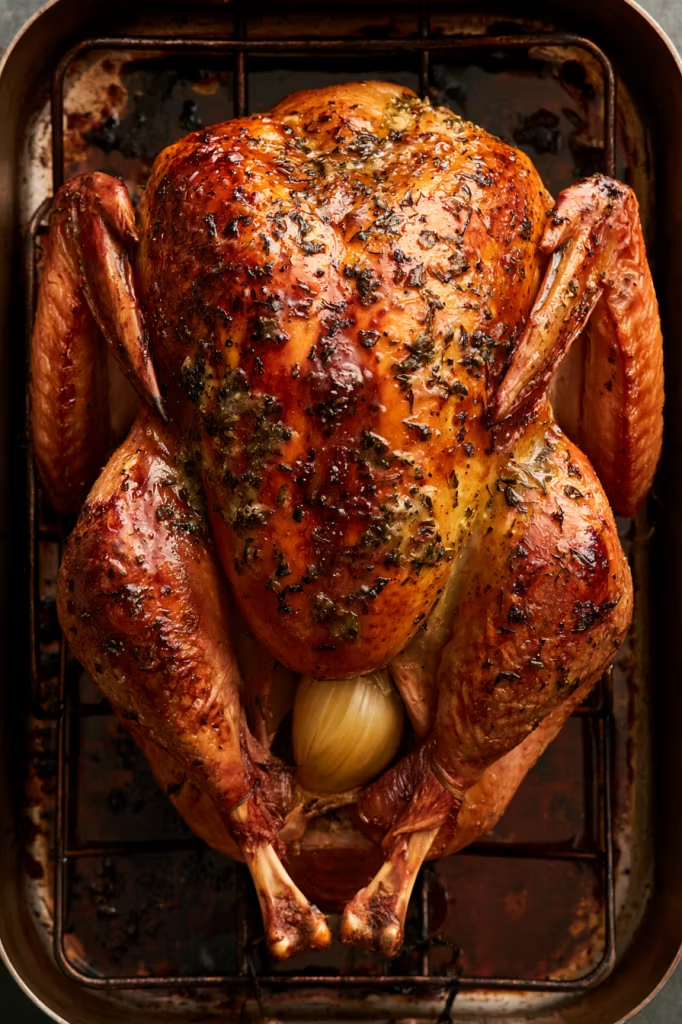
Now it’s ready for the oven! Roast the turkey at 325 degrees F for about 13-15 minutes per pound, or until the internal temperature, measured in the middle of the thigh and breast, reaches about 165 degrees.
Check on the turkey about halfway through roasting. Once that skin is a gorgeous golden brown, cover the top with tinfoil to help protect the breast meat from overcooking. You can also do this in reverse: start with the turkey tented with foil, then remove it during the last hour or so to let the skin brown.
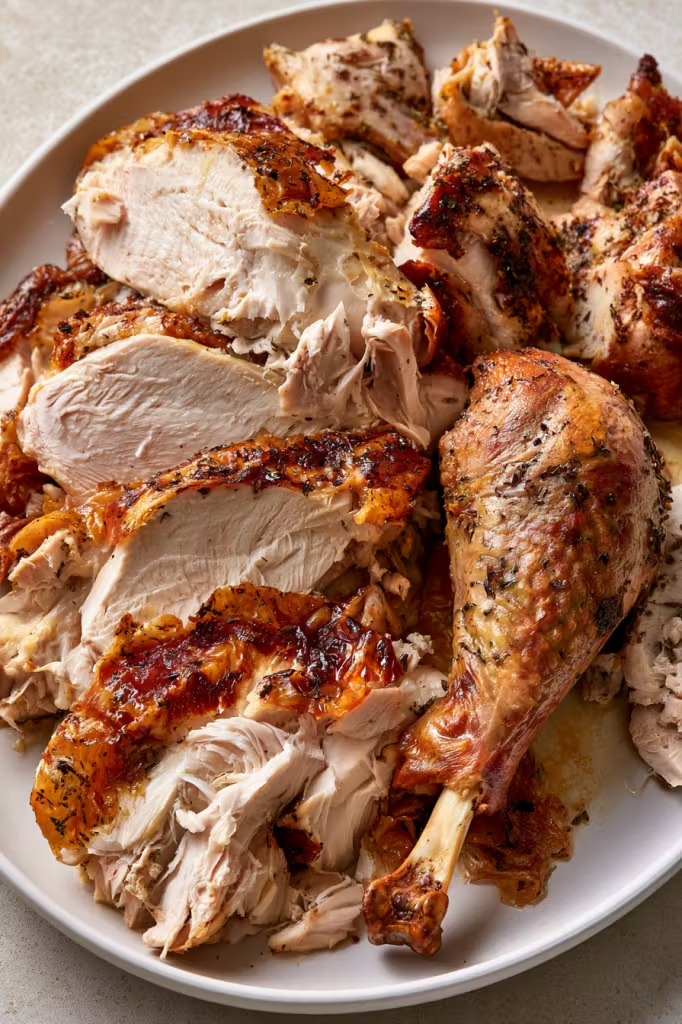
When the turkey is finished, tent it with foil and let it rest on the counter. Move it to a large cutting board set inside a sheet pan to catch those extra juices as you carve. Give the turkey 20-30 minutes to rest before carving, and don’t forget to save all those flavorful drippings and juices in the roasting pan for gravy.
Expert Tips
Give your turkey plenty of time to thaw. A large frozen turkey takes several days to thaw in the refrigerator. Planning for that extra day means you won’t be worrying about a frozen center on Thanksgiving morning.
Pat it really dry. Before adding the herb butter, take a minute to thoroughly dry the turkey with paper towels. It’s a small step, but an important one before coating the bird.
Don’t skip the butter underneath the skin. I know it’s tempting to simply brush everything over the outside, but getting a few tablespoons of that garlic and herb butter underneath the breast skin puts all that flavor closer to the meat.
Keep an eye on the color. Once the turkey develops that beautiful golden skin, tent the top with foil. This allows it to continue roasting while protecting the breast meat.
Trust the temperature. The 13-15 minutes per pound is a helpful guide, but the internal temperature tells you when the turkey is actually ready.
And let it rest! After waiting for the turkey to roast, another 20-30 minutes can feel like forever, but this resting period is part of the recipe. Use that time to finish the gravy and get your side dishes onto the table.
Recipe Variations
If you don’t have fresh herbs, you can still make this turkey. Substitute 1 teaspoon dried herbs for every 1 tablespoon fresh chopped herbs.
No roasting rack? A disposable roasting pan works, too. Place 4-5 ribs of celery and 4 large carrots, roughly chopped, on the bottom of the pan to elevate the turkey. The vegetables also add flavor to the drippings, though they aren’t recommended for eating or adding to the finished gravy.
You can also prepare the turkey in an electric roasting oven using the same directions.
For a convection oven, follow the same method but start checking the temperature after 2 hours, since the turkey will cook more quickly.
Storage & Reheating
Thanksgiving leftovers might be almost as exciting as Thanksgiving dinner itself. Once everyone has eaten, carve the remaining turkey and transfer the meat to covered containers for the refrigerator.
Cooked turkey should be refrigerated within 2 hours and can be kept in the refrigerator for 3-4 days. For longer storage, freeze the turkey in freezer-safe containers.
When you’re ready for leftovers, reheat individual portions rather than reheating the entire turkey. Adding a little broth or water and covering the dish can help keep the meat from drying out. Reheat leftover turkey to 165°F.
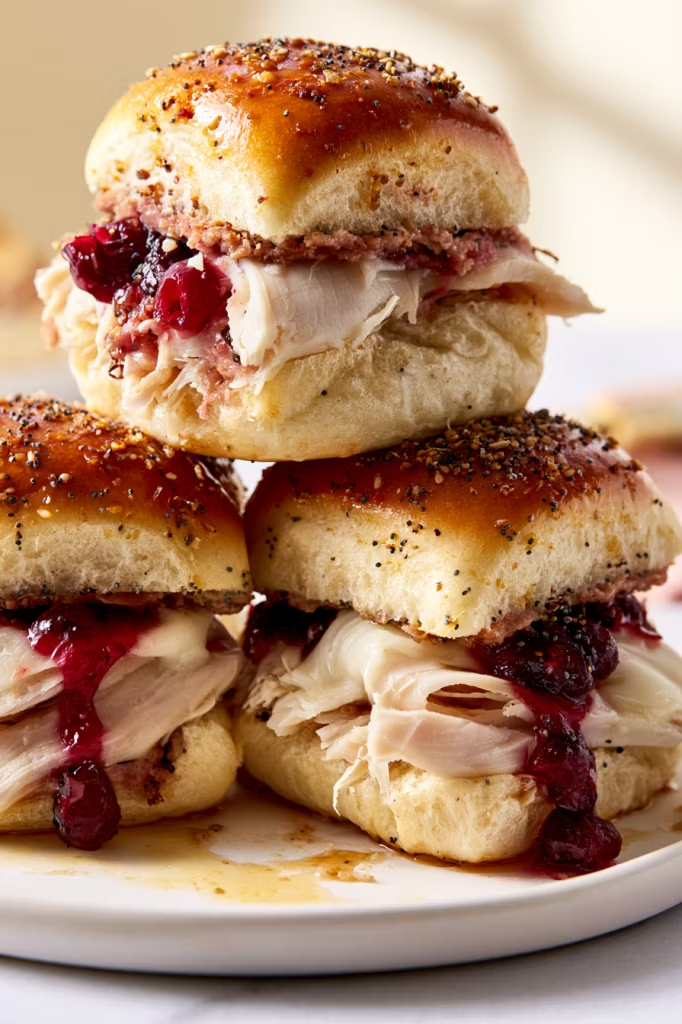
And, of course, cold leftover turkey is ready for all those post-Thanksgiving sandwiches, too.
Serving Suggestions
For me, this turkey calls for all the Thanksgiving classics. Spoon some of those pan drippings into homemade turkey gravy, pile creamy mashed potatoes alongside it, and add stuffing, green bean casserole, sweet potato casserole, cranberry sauce, and warm rolls.
If you’re planning the whole holiday spread, I’d balance all those rich, cozy dishes with something fresh or green, too. A simple salad or roasted seasonal vegetables fit right in.
And when it’s finally time to serve, bring the whole turkey to the table on a large platter before carving. A few sprigs of rosemary, thyme, or sage around the turkey make a simple garnish and tie everything back to those wonderful herbs already flavoring the bird.
This is Thanksgiving dinner at its best: a golden turkey in the middle of the table, plenty of comforting sides around it, and enough leftovers to look forward to tomorrow.
Recipe FAQs
1. How long does it take to thaw a turkey?
Plan on 24 hours in the refrigerator for every 5 pounds of turkey. I like to add an extra day just to be safe, especially with a larger bird. This makes Thanksgiving morning much easier because your turkey is completely thawed and ready to prep.
2. How do I know when my turkey is done?
The easiest way is to use a meat thermometer. The turkey is ready when the internal temperature reaches about 165°F when checked in the middle of the breast and thigh. The 13–15 minutes per pound in the recipe is a good guide, but always go by temperature for the final check.
3. What should I do if the turkey is browning too quickly?
Simply tent the top with a large piece of foil once the skin turns golden brown. This helps protect the breast meat while the rest of the turkey finishes cooking. You can also start with the turkey covered and remove the foil during the last hour or so to let the skin brown.
4. Do I really need to let the turkey rest before carving?
Yes, I recommend letting it rest for 20–30 minutes before carving. It gives you time to finish the gravy and sides while the turkey rests, and you won’t have to rush to get everything on the table at once.
5. What should I do if my turkey is done too early?
If it’s only a little early, tent the turkey with foil and let it rest while you finish the rest of dinner. If you have a much longer wait before serving, carve and refrigerate the turkey instead of leaving it out for hours. Reheat the meat to 165°F when you’re ready to serve.
Herb-Butter Roasted Thanksgiving Turkey
Ingredients
Turkey
- 1 12-20 pound turkey
- 1 onion, peeled and quartered
- 1 lemon, quartered
- 1 apple, (your favorite kind), quartered
- 75 ounces container fresh rosemary
- 75 ounces container fresh thyme
- 75 ounces container fresh sage
Herb Butter
- 1 cup unsalted butter, softened
- 1 tsp salt
- 1/2 tsp freshly ground black pepper
- 6-8 cloves garlic, minced
- fresh chopped herbs
Instructions
- Thaw the turkey if frozen. Allow 24 hours of refrigerator thawing time for every 5 pounds of Turkey. For extra assurance that it is completely thawed, allow 1 additional day.
- Bring the turkey out of the refrigerator. One hour before roasting, remove the thawed turkey from the fridge and allow it to come to room temperature.
- Prepare the oven. Position the oven rack so the turkey will be centered in the oven. Preheat the oven to 325 degrees F.
- Prepare the herb butter. Mix the room temperature butter with the minced garlic, salt, pepper, one tablespoon fresh chopped rosemary, one tablespoon fresh chopped thyme, and half a tablespoon of fresh chopped sage. Keep the remaining fresh herbs aside; they will go inside the turkey cavity.
- Prepare the turkey. Take the turkey out of its packaging and remove the neck and giblets from the cavities. Save them for gravy if desired, or discard them. Thoroughly pat the turkey dry using paper towels.
- Fill the cavity. Season the inside of the turkey with salt and pepper. Add the quartered lemon, onion and apple along with the leftover herbs.
- Butter beneath the skin. Carefully loosen and raise the skin covering the breasts with your fingers. Spread a few tablespoons of the prepared herb butter underneath the skin.
- Position the turkey. Fold the wings underneath the turkey, then place the bird on a roasting rack set inside a roasting pan.*
- Coat the exterior. Microwave the remaining herb butter mixture for 30 seconds. It does not have to melt completely; it only needs to become very soft. Using a basting brush, coat the outside of the turkey, including the legs and wings, with the remaining herb butter.
- Roast. Cook at 325 degrees F for about 13-15 minutes per pound, or until the internal temperature, measured in the middle of the thigh and breast, reaches about 165 degrees. Tent the turkey with foil and allow it to rest on the counter, then transfer it to a large cutting board positioned inside a sheet pan so any additional turkey juices are caught during carving.
- Watch the browning. Check the turkey approximately halfway through its cooking time. When the skin has become golden brown, cover the top of the turkey with tinfoil so the breast meat does not overcook. Alternatively, begin roasting the turkey under a foil tent and remove the foil during approximately the final hour of cooking so the exterior can brown.
- Rest before carving. Leave the turkey to rest for 20-30 minutes before carving.
- Save the pan juices. Keep the drippings and juices remaining in the roasting pan if you plan to make turkey gravy.
Notes
Recipe Notes
Nutrition
Calories: 576kcal | Carbohydrates: 3g | Protein: 70g | Fat: 30g | Saturated Fat: 12g | Cholesterol: 264mg | Sodium: 518mg | Potassium: 765mg | Sugar: 1g | Vitamin A: 565IU | Vitamin C: 5.4mg | Calcium: 46mg | Iron: 2.9mg Nutrition information is per serving and is an approximation.