
Rich, Creamy, and Bursting with Flavor—Panang Chicken Curry in 30 Minutes!
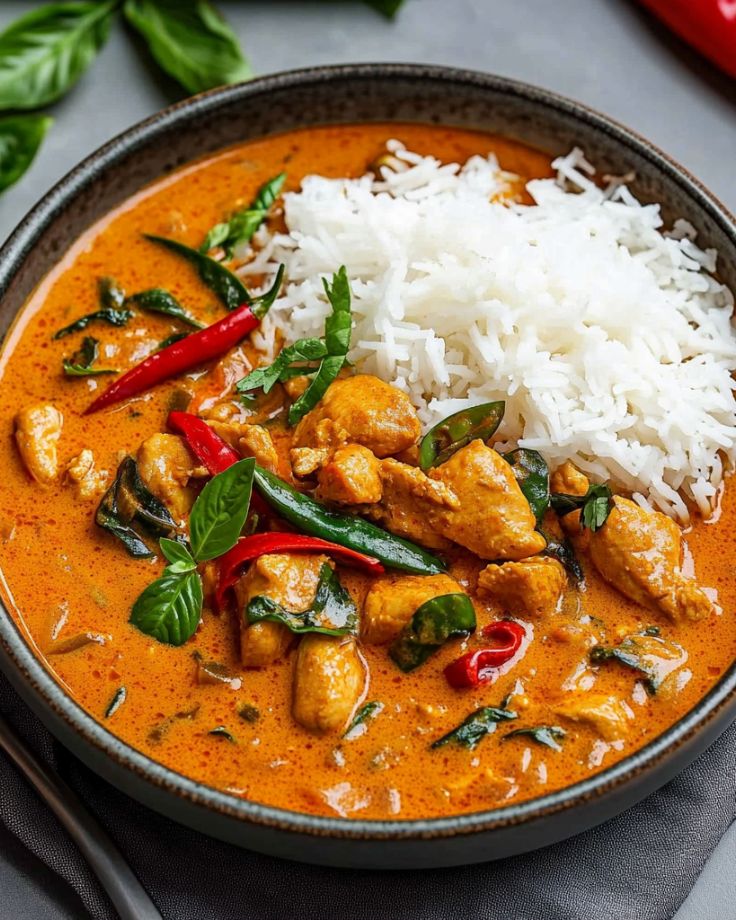
If you love a good Thai curry, you know that creamy sauce is the real star of the show. And this Thai Panang Chicken Curry? Oh, it delivers.
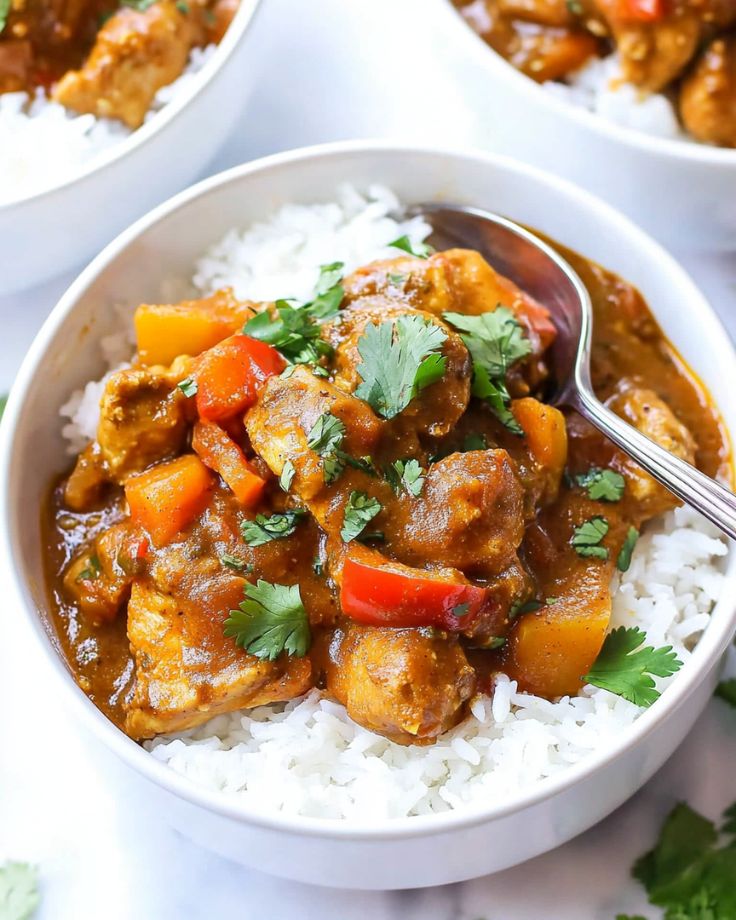
Tender chicken thighs simmer in a rich coconut sauce with Panang curry paste, fragrant kaffir lime leaves, Thai basil, and just enough peanut butter to give the whole thing that wonderfully nutty, creamy finish. The best part? You can get all of that big, takeout-style flavor on the table in about 30 minutes.
This is the kind of dinner that makes the kitchen smell amazing, gets everyone wandering in to see what’s cooking, and somehow disappears from the table much faster than you planned. Serve it over rice, quinoa, or noodles, spoon that sauce generously over everything, and dig in.
Why You’ll Love This Recipe
There are plenty of reasons to make this curry, but let’s start with the obvious one: it tastes seriously good.
The coconut milk makes the sauce rich and silky, while the Panang curry paste brings plenty of savory spice and depth. The kaffir lime leaves add that lovely citrusy aroma, and the peanut butter rounds everything out with a subtle nuttiness.
And then there’s the chicken. Boneless chicken thighs stay wonderfully tender while they simmer away in that creamy sauce. No dry chicken here, thank you very much.
It’s also a wonderfully practical dinner. Everything comes together in one skillet, the prep is straightforward, and you don’t need to spend your entire evening standing over the stove. That’s the kind of recipe I like to keep close by.

For Thai Panang Chicken Curry
- Chicken Thighs – I use boneless, skinless chicken thighs because they stay tender and juicy while simmering in the curry sauce. Cut them into bite-sized pieces so they cook evenly.
- Onion – this adds a little sweetness and savory flavor to the curry while giving the sauce a nice base.
- Red Bell Pepper – for a little sweetness, color, and freshness.
- Orange Bell Pepper – I love using another color of bell pepper here because it adds more sweetness and makes the curry look extra inviting.
- Garlic – this is one of those ingredients that quietly makes everything taste better. It adds a savory, aromatic flavor to the curry.
- Coconut Oil – for sautéing the vegetables and building the base of the curry.
- Panang Red Curry Paste – this is where a lot of the big Thai-inspired flavor comes from. It brings the curry its signature spicy, savory, and aromatic flavor.
- Peanut Butter – this gives the sauce that subtle nutty richness that makes Panang curry so creamy and satisfying.
- Kaffir Lime Leaves – these add a wonderful citrusy fragrance to the curry. They can be a little tough after cooking, so you can remove them before serving or simply eat around them.
- Thick, Unsweetened Coconut Milk – this is what makes the curry sauce rich, creamy, and silky. Be sure to use unsweetened coconut milk so the curry doesn’t become too sweet.
- Fish Sauce – this adds salty, savory depth to the sauce and helps balance all those rich coconut and curry flavors.
- Thai Basil Leaves – for a fresh, fragrant finish. Stir them in at the end so their flavor stays bright.
For Serving
- Rice – my first choice for serving this curry. It soaks up that creamy coconut sauce beautifully.
- Quinoa – a hearty alternative if you’re not in the mood for rice.
- Noodles – another great option, especially if you love a saucy noodle dish. The curry sauce clings to the noodles in all the right ways.
Step-by-Step Instructions
Prep the Ingredients
Before you turn on the stove, get everything chopped and ready to go. Cut the chicken into bite-sized pieces, chop the onion and bell peppers, mince the garlic, and crush those kaffir lime leaves.
Once the cooking starts, things move pretty quickly, so having everything ready makes life much easier.
Cook the Vegetables
Heat your skillet or wok over medium-high heat and add the coconut oil.
Sauté the onion first, then add the bell peppers and garlic. Give everything a few minutes in the pan until the vegetables start to soften.
Already smelling good? Yep. We’re on the right track.
Add the Curry Paste
Now comes the good stuff.
Move the vegetables to the sides of the skillet and add the Panang curry paste and peanut butter right into the center. Let them sauté for a couple of minutes, stirring frequently.
This little step is worth it. Cooking the curry paste before adding the liquids helps wake up all those wonderful spices and builds a deeper flavor.
Simmer the Curry
Pour in the coconut milk and fish sauce, then add the crushed kaffir lime leaves. Give everything a good stir before adding the chicken.
Bring the curry to a boil, then reduce the heat and let it simmer until the chicken is fully cooked and the sauce has thickened.
And this is the point where you may find yourself standing over the skillet thinking, I really hope nobody is hungry yet.
Finish and Serve
Once the curry is finished, take it off the heat and stir in the Thai basil.
That final handful of basil adds a fresh, fragrant finish that works beautifully with the rich coconut sauce.
Now grab your rice, quinoa, or noodles and spoon that curry over the top. And don’t be shy with the sauce. That’s the best part.
Expert Tips
Have everything ready before cooking. This isn’t a complicated recipe, but once the skillet gets going, the steps move quickly. A little prep beforehand makes the whole thing much easier.
Let the curry paste cook. Give the Panang curry paste and peanut butter those few minutes in the skillet. It helps bring out their flavor and gives the curry a more developed taste.
Use thick, unsweetened coconut milk. The coconut milk is doing a lot of work here, so a rich, full-bodied variety gives you the creamiest sauce.
Cut the chicken evenly. Similar-sized pieces will cook at roughly the same rate, which means no chasing after one giant piece while the smaller ones are already done.
Don’t forget the kaffir lime leaves. They may not look like much, but they add a beautiful citrusy fragrance to the curry. Just remember that they can remain a little tough after cooking.
Taste before serving. Curry paste and fish sauce can vary in intensity, so give the sauce a taste once it has simmered. That’s your moment to make sure everything is balanced.
Recipe Variations
Make It Spicier
Love some heat? Use a hotter Panang curry paste or add extra chili to suit your taste. Start small—you can always add more heat, but taking it away is another story.
Add More Vegetables
Want to make the curry a little more colorful and hearty? Add extra vegetables such as mushrooms, zucchini, green beans, or broccoli.
Swap the Protein
Chicken thighs are wonderfully tender here, but you can experiment with other proteins if you like. Shrimp, chicken breast, or tofu can all work with this creamy curry-style sauce. Just remember that cooking times will vary.
Change Up the Crunch
The peanut butter gives the sauce its subtle nutty flavor, but you can take things one step further by sprinkling some crushed peanuts over the finished curry.
A little crunch on top never hurt anybody.
Serve It Differently
Rice is always a good idea, but don’t stop there. Quinoa and noodles are also delicious with that creamy Panang sauce.
Storage & Reheating
Got leftovers? Lucky you.
Let the curry cool before transferring it to an airtight container and refrigerating it. It will keep in the refrigerator for 3–4 days.
When you’re ready to reheat it, warm the curry gently in a saucepan over medium-low heat, stirring occasionally. If the sauce has thickened while chilling, add a small splash of water or coconut milk to loosen it.
For a single serving, the microwave works, too. Heat it in short intervals and stir between each one so the curry warms evenly.
And honestly, the leftovers may be even better the next day. All those flavors have had extra time to get acquainted.
Serving Suggestions
This curry was made for something that can catch every last bit of that creamy sauce.
Serve it over steamed jasmine rice for a classic combination, or try coconut rice when you’re in the mood to lean into the richness. Quinoa and noodles work beautifully, too.
For a little freshness alongside the curry, add a simple cucumber salad or another crisp vegetable side. The cool, fresh crunch is a lovely contrast to the warm, creamy sauce.
And if you’re serving this for friends or family, put the curry in the middle of the table with plenty of rice alongside it. Let everyone help themselves.
Just make sure you make enough. Seconds are very likely.
A Little Note About the Ingredients
A few of the ingredients in this recipe—especially Panang curry paste, kaffir lime leaves, Thai basil, fish sauce, and thick coconut milk—may mean a trip to an Asian grocery store.
But don’t let that scare you away.
These ingredients are what give the curry its distinctive flavor, and many of them are worth keeping in your pantry or freezer once you’ve bought them. Kaffir lime leaves, in particular, can be frozen and used whenever a curry needs that unmistakable citrusy aroma.
And if you’ve never cooked with them before, consider this your excuse to start.
Thai Panang Chicken Curry Recipe
Ingredients
- 1 ½ Ib boneless, skinless chicken thighs, chopped
- 1 small onion, peeled and chopped
- 1 red bell pepper, seeded and chopped
- 1 orange bell pepper, seeded and chopped
- 2 cloves garlic, minced
- 1 tbsp coconut oil
- 4 ounces Panang red curry paste (1 can)
- 1 tbsp peanut butter
- 12 kaffir lime leaves, crushed
- 1 can (13.5 ounces) thick, unsweetened coconut milk
- 3 tbsp fish sauce
- ¼ cup Thai basil leaves (or sweet basil)
Instructions
Prep the Ingredients:
- Cut the chicken into bite-sized pieces.
- Chop the onion and bell peppers into roughly 1-inch pieces.
- Mince the garlic and crush the kaffir lime leaves to release their oils.
Cook the Vegetables:
- Heat a 14-inch skillet (or wok) over medium-high heat.
- Add coconut oil and let it melt.
- Sauté the onion for 1 minute, then add the bell peppers and garlic.
- Cook for another 2-3 minutes, stirring occasionally.
Add the Curry Paste:
- Move the veggies to the sides of the skillet.
- Add the Panang red curry paste and peanut butter to the center.
- Sauté for 2-3 minutes to intensify the flavors, stirring frequently.
Simmer the Curry:
- Pour in the coconut milk, fish sauce, and add the kaffir lime leaves. Stir to combine.
- Add the chopped chicken, then bring the mixture to a boil.
- Reduce heat and simmer for 10-15 minutes, stirring occasionally, until the chicken is fully cooked and the sauce thickens.
Finish and Serve:
- Remove from heat and stir in the Thai basil leaves.
- Serve hot with rice, quinoa, or noodles.
Notes
- Some ingredients, like Panang curry paste, kaffir lime leaves, thick coconut milk, fish sauce, and Thai basil, may require a trip to an Asian grocery store—but they’re worth it!
- Kaffir lime leaves can be stored in the freezer. They may darken but will keep their flavor.
- These leaves remain slightly tough even after cooking; you can eat them, remove them, or eat around them.
Nutrition
Common Questions About Thai Panang Chicken Curry
Can I use chicken breast instead of chicken thighs?
Yep, you can. Chicken thighs are my first choice here because they stay juicy and tender while simmering in the curry sauce, but chicken breast will work too. Just be a little more careful not to overcook it, since breast meat is leaner and can dry out faster.
What if I can’t find kaffir lime leaves?
Don’t panic. They’re one of those ingredients that can be surprisingly difficult to find depending on where you shop. If you can find fresh or frozen kaffir lime leaves, grab them—they add a lovely citrusy fragrance that really makes this curry taste like Thai takeout.
And here’s a handy tip: freeze any extra leaves. They may darken a little, but they’ll still be wonderfully fragrant the next time you’re making curry.
How can I make this curry less spicy?
The easiest place to control the heat is the Panang curry paste. Different brands can vary quite a bit, so if you’re cooking for someone who isn’t a fan of spicy food, check the heat level before you buy it.
The good news is that you don’t need a ton of heat for a delicious curry. The coconut milk, peanut butter, fish sauce, lime leaves, and basil are doing plenty of flavorful work all on their own.
Why is my Panang curry sauce too thick?
It happens! The sauce will naturally thicken as it simmers, and it can get even thicker once it sits for a while.
If yours is thicker than you’d like, simply stir in a small splash of water or coconut milk until you get the consistency you’re after. Add it gradually—you can always loosen the sauce more, but you can’t exactly scoop the liquid back out.
What should I serve with Panang Chicken Curry?
Rice is the obvious answer, and for good reason. Steamed jasmine rice is fantastic with this curry because it soaks up all that creamy coconut sauce.
But you don’t have to stop there. The recipe is also delicious with quinoa or noodles, just as listed in the recipe card. For something fresh on the side, try a simple cucumber salad or crisp vegetables to balance out the rich curry.
And please don’t leave any sauce behind. That’s the good stuff.